


Elijah Wheeler Lassance was born on July 15th, weighing 7 pounds, 5 ounces and measuring 21.5 inches long!
My Unforgettable Birth Journey: Embracing the Unexpected
Every mother-to-be dreams of her birth story. For me, the journey of bringing Elijah Wheeler Lassance into the world was a profound lesson in letting go of expectations and embracing the unexpected. Since finding out I was pregnant, I had meticulously planned to document my birth experience for the blog, envisioning a narrative of wonder and natural beauty. While the miracle of growing and birthing a tiny human remains unparalleled, the process itself was far from the serene, empowering event I had imagined. It was, in truth, an odyssey of immense length, intense pain, and deeply traumatic moments.
Initially, I considered keeping this challenging experience private, a memory too raw to share. However, I’ve come to believe that articulating every detail will be a crucial step in my healing and processing. This is a long and honest account, a testament to the unpredictable nature of childbirth and the incredible strength it demands.
The Ideal vs. Reality: My Birth Preferences
My original vision for Elijah’s arrival was a peaceful, natural birth at a specialized birth center, guided by a compassionate midwife. I yearned for an experience free from medical interventions, far removed from the sterile environment of a hospital. To support this dream, we enlisted the help of a doula, a professional trained to provide continuous physical, emotional, and informational support during labor. I felt thoroughly prepared, confident in my body’s ability and my resolve to achieve a natural delivery.
It was through conversations with my midwife that I learned a valuable lesson: “Birth Preferences” is a far more accurate term than “Birth Plan.” You can prepare and visualize all you want, but ultimately, the journey of labor and delivery unfolds on its own terms, often with little regard for human desires. Looking back, the only item from my extensive birth plan that materialized was a vaginal birth – an outcome that, at several points, seemed agonizingly out of reach.
The Agonizing Wait: Overdue and Overheated
Elijah’s original due date was July 2nd. My heart’s desire was for my sister to be present, so we arranged for her to fly in on June 30th for a two-week stay. When her tickets were booked, I was certain our baby would have arrived by then. We pictured idyllic days of sisterly bonding, followed by the baby’s swift arrival, leaving us ample time to cuddle and play with our newborn. But as the days post-due date crept by, with no sign of Elijah, a collective anxiety settled over us. The relentless summer heat, often exceeding 100 degrees, limited our ability to find distractions or comfort.
My 40-week checkup revealed I was only 1 cm dilated – a disheartening update. The birth center had a strict policy: babies had to arrive between 37 and 41 weeks. Surpass 41 weeks, and while you could still use the midwife’s expertise, the delivery would have to take place in a hospital. This news fueled my determination to have a birth center birth. I earnestly explored various “natural” methods to encourage labor, from spicy foods to long walks, but none seemed to yield results. By the afternoon of my 41st week, a sense of desperation led me to a last resort: castor oil. The internal debate raged: should I let him come naturally, or should I push for a birth center birth, even if it meant a mild form of self-induction, which I generally wanted to avoid?
A False Start: The Castor Oil Chronicles
The castor oil was, without exaggeration, disgusting. The immediate discomfort and unpleasantness led to instant regret. Yet, about three hours later, a new sensation emerged—contractions. Initially, they were hard to distinguish from the lingering stomach cramps induced by the oil, but as I began timing them, their distinct pattern became undeniable. They were consistent, arriving every 3-4 minutes and lasting approximately 45 seconds.
A hopeful call to the midwife confirmed that since it was still before midnight on my 41st week, continued progress meant I could still deliver at the birth center. I was ecstatic, almost disbelieving that after weeks of waiting, labor had finally begun! Sleep became impossible as the contractions intensified and maintained their steady rhythm. I encouraged my husband and sister to rest while I called our doula to join us around 2 AM. The night passed in a blur of anticipation and pain, yet I felt a strong sense of progress.
The Birth Center Disappointment and Slowdown
The next morning, the midwife asked us to come in for a check. Anticipating a quick visit before returning home, we packed all our essentials “just in case.” Upon arrival, the check revealed I was 3 cm dilated – a positive step from the previous day’s 1 cm. Given the progress, we were invited to stay, and we eagerly settled into a birthing suite, brimming with hope that Elijah’s arrival was imminent. However, almost immediately, my contractions slowed dramatically, stretching to 10 minutes apart. Frustration mounted as I tried every trick to revive their intensity: chamomile tea, walks in the scorching 100-degree heat, and hours spent bouncing on an exercise ball while using a breast pump. Briefly, the contractions picked up to 5 minutes apart, only to recede again. Exhaustion and discouragement became my constant companions, not only from the discomfort but from the sheer effort required to coax my body into labor.
Hospital Transfer: A Crushing Blow
As 9 PM arrived, a new midwife came on shift. She delivered the news that, having labored for so long and now officially past the 41-week mark, I would need to transfer to the hospital for a non-stress test (NST). If the test results were reassuring, I could return home to continue laboring. At that moment, the dream of a birth center delivery vanished. I was officially “risked out.” The weight of this realization, combined with extreme fatigue, made the drive to the hospital feel incredibly long.
At the hospital, another wonderful midwife performed a cervical check. After nearly 24 hours of labor, I was still only 3 cm dilated. Hooked up to monitoring machines for half an hour, I was told everything looked good, pending approval from the head doctor. Minutes later, the midwife returned, her expression grave. The test, she explained, did not look entirely okay, and they wanted to admit me for 24 hours of observation. They offered morphine to help me sleep through the contractions, but I politely declined, feeling apprehensive. My husband, sister, and I spent that night in the hospital room, and surprisingly, despite the contractions, I managed to get some much-needed sleep.
The Breaking Point: Interventions and the Epidural
The following morning, a midwife entered to discuss our options. When she confirmed I was still only 3 cm dilated, I broke down. Over 30 hours of painful, consistent contractions, and absolutely no progress. She presented two choices: breaking my water or administering Pitocin to accelerate labor. My heart sank. Both options, I knew, intensified contractions dramatically, pushing me further from my natural birth aspirations. With heavy reluctance, I opted for my water to be broken. Within 30 minutes, the contractions surged, becoming almost unbearable. The subsequent hours are a blur of intense pain and a growing sense of desperation. I told myself I would endure naturally if there was significant progress, but if not, I would consider an epidural. The check revealed I was still, agonizingly, at 3 cm. That news shattered my resolve. I decided then and there that if I was to have any energy left to push, an epidural was essential. It was a complete deviation from my ideal, but I simply couldn’t continue.
The anesthesiologist arrived, and the epidural was administered. Within minutes, a blessed wave of relief washed over me. The pain subsided, allowing me to finally relax and drift into a deep sleep. Time became an abstract concept; midwives and nurses shifted through their rotations, their faces a changing mosaic. Hours after the epidural, a new midwife checked me again. Still 3 cm dilated. At this point, I was too depleted, too numb with exhaustion and disappointment to even react. Over 50 hours in labor, and I felt utterly defeated. The midwife observed that my contractions weren’t strong enough to effectively move the baby down and suggested Pitocin to strengthen them. Pitocin, like the epidural, was never on my birth plan, but with an epidural already in place, the prospect of intensified pain was moot. I felt I had no other choice.
A Glimmer of Hope and a New Challenge: Posterior Presentation
The Pitocin drip began, and I drifted in and out of sleep. A few hours later, the midwife returned. “You’re at 6 cm!” she announced. It was the most encouraging news I had heard since labor began! By this time, my water had been broken for many hours, and a fever began to set in. I would wake up drenched in sweat, then fall back into a fitful sleep, losing all track of time and day. Throughout this entire ordeal, I suffered from severe back pain. The epidural initially provided relief, but as Elijah descended, the pain resurfaced with a vengeance, seemingly impervious to the medication.
The midwife and nurse confirmed my suspicion: Elijah was causing the intense back pain and slow progress because he was in a posterior position—his spine against mine, facing upwards. They expressed concern that he might not fit through the birth canal if he remained in this position. To encourage him to turn, I spent what felt like an eternity lying with a large exercise ball positioned between my legs.
The C-Section Scare: Panic and Relief
During this period, my temperature climbed to 101 degrees, prompting the administration of antibiotics. A particularly helpful nurse eventually had me lie with my leg in a stirrup, a position that, after some time, finally encouraged Elijah to rotate into the correct anterior position. Suddenly, I felt an intense, undeniable urge to push. The nurse performed one last check to confirm I was indeed 10 cm dilated. As she checked, her expression shifted. She believed she felt the umbilical cord preceding the baby’s head—a cord prolapse, a dire emergency. Within less than a minute, approximately 15 medical personnel flooded the room. I recall the midwife’s urgent declaration that if it truly was the cord, a C-section was immediately necessary. Someone began shaving me, and I saw Eric being prepped for the operating room. All the while, with each contraction, my body instinctively pushed.
Amidst the chaos, a nurse pressed an informed consent form for a C-section into my hand, urging me to sign. Simultaneously, a surgeon conducted an internal examination, which felt like his entire arm was inside me. He declared he didn’t believe it was the umbilical cord, as it wasn’t pulsing. Another surgeon was called in for a second opinion, followed by another check from the midwife. After what felt like an eternity of terrifying uncertainty, they finally concurred: it was not the umbilical cord. I simply needed to push. By this point, I was emotionally and mentally drained, compounded by the fever. As much as I dreaded a C-section, a small part of me had almost welcomed the idea of it all ending. I am eternally grateful to that surgeon for saving me from an unnecessary C-section.
The Final Push: Exhaustion and Elation
The final pushing phase was, quite simply, utterly exhausting. Eric stood by my side, tirelessly fanning me. My sister, on the other, offered ice chips between pushes, while our doula provided comforting massages and unwavering encouragement. I pushed for nearly two grueling hours, countless times questioning my physical capacity. Lightheaded and profoundly tired, I somehow found a deep reserve of strength for the ultimate stage. When Elijah’s head finally began to crown, the midwife guided my hand to feel it—an indescribable, surreal sensation. I knew then that only a few more pushes remained. The entire moment is a blur, but I distinctly remember hearing mentions of the baby’s heart rate escalating, him being tachycardic. Yet, my focus was singularly on the monumental task at hand.
Elijah’s Arrival and the NICU Journey
After days of relentless labor, I finally pushed my son out. The midwife placed him on my chest for only a fleeting second before swiftly taking him back, cutting the cord, and handing him over to a waiting team of nurses. Elijah was slightly jaundiced and, more alarmingly, not breathing independently. My mind struggled to comprehend what was happening. The medical staff, appearing calm and focused, began their work. My husband, sister, doula, and I, however, sat in stunned silence. After an arduous, multi-day labor, my baby was taken away because he couldn’t breathe.
The midwife reassured us it would be okay, and a few agonizing seconds later, we heard his first cry—a sound of immense relief, yet my worry persisted. Once his breathing stabilized, he was whisked away to the NICU for further monitoring. Thankfully, my husband was allowed to accompany him. After they left, the midwife helped me deliver the placenta, performed a few stitches, and then departed. For a moment, it was just my sister, our doula, and me in the room, repeatedly exclaiming, “What just happened?” I had given birth, but my baby wasn’t on my chest, engaging in the skin-to-skin contact I had so vividly imagined. Instead, he was in the NICU, connected to machines. Knowing my husband was by his side brought a measure of comfort.
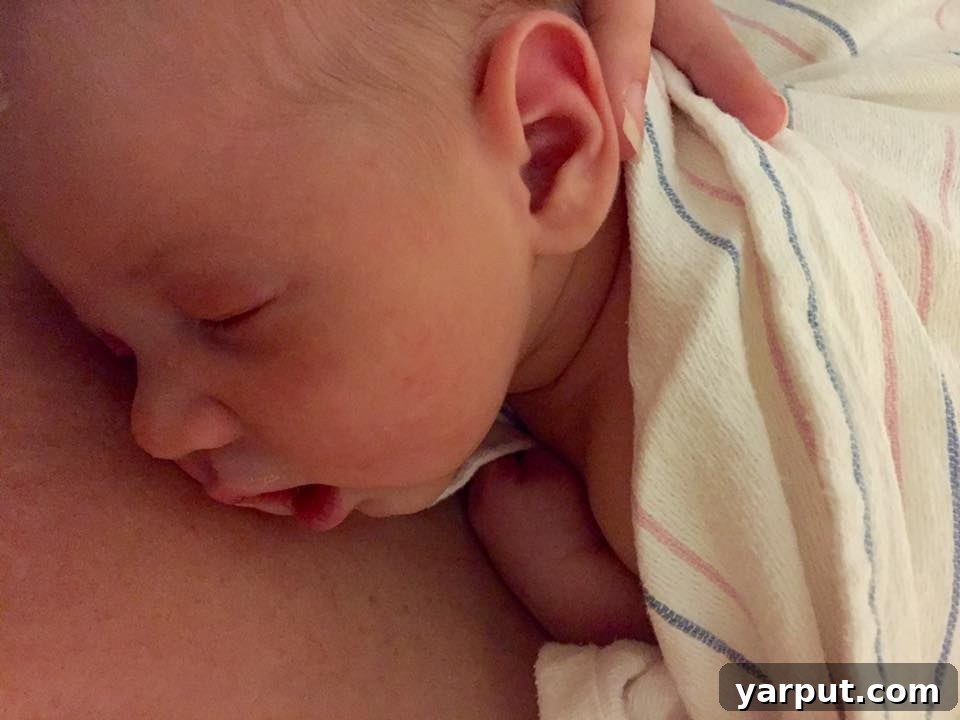
Approximately two hours later, I was finally wheeled down to the NICU. There, I held my son for the very first time. He was, without a doubt, the most beautiful baby I had ever laid eyes on, and I felt a comical mix of awkwardness and overwhelming love trying to hold and maneuver him. My visit was brief before we were transported to our recovery room. It felt profoundly sad and strange to be in our room without the little baby I had just brought into the world. Over the next few days, I visited him multiple times throughout the night, striving to be there whenever he was awake. He was closely monitored and given antibiotics due to my fever during labor. Despite his initial struggles, he was undeniably the largest baby in the NICU, and I truly believe he was healthy and strong once he started breathing on his own. They decided to keep him for three days for observation, a decision I accepted as a necessary precaution, though I longed for him to be with me.
Life at Home: Adjusting to Motherhood and Healing from Expectations
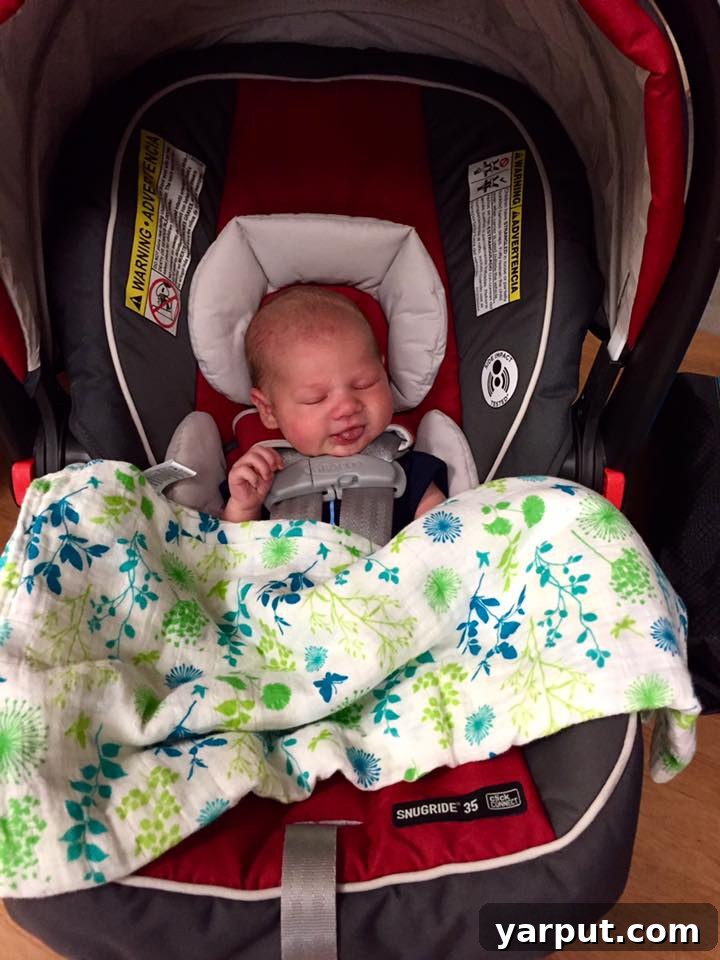
We are finally home, a complete family, and the adjustment has been significant. Parenting is simultaneously far more challenging and infinitely more amazing than I could have ever imagined. I’m still navigating the loss of spontaneous freedom and the relentless rhythm of nighttime awakenings. Physically, I’m feeling much better, but I’ve had to dedicate time to emotionally process and let go of the birth experience I had so carefully envisioned. It’s easier to accept the unplanned medical interventions like the epidural and Pitocin, as they were necessary for our well-being. What I struggle with more is the fact that Elijah didn’t receive immediate skin-to-skin contact with me after birth, and that his grand entrance into the world was immediately followed by being whisked away by strangers.
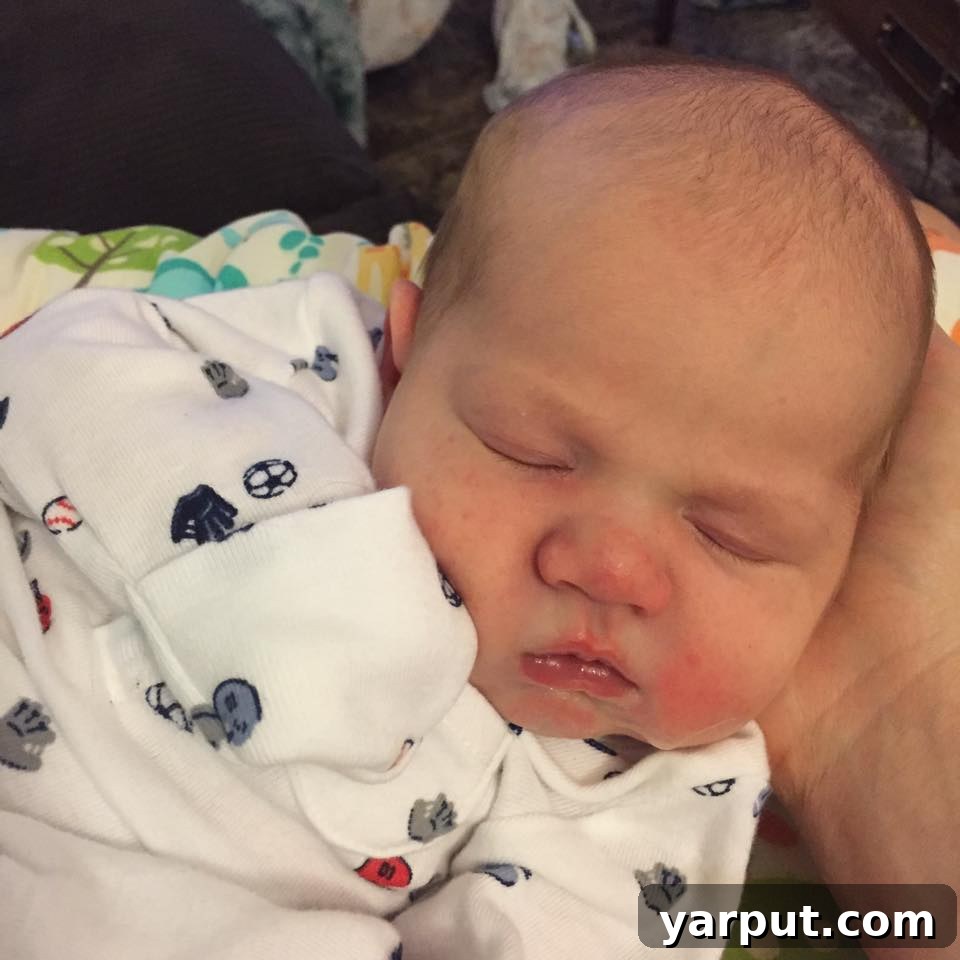
My heart aches for him that his beginning was marked by such a tumultuous entry. However, I feel incredibly fortunate that he is healthy, and I am making up for lost time with an abundance of skin-to-skin moments and snuggles now that he is finally home. I also worried intensely that breastfeeding would be difficult after his NICU stay, fearing he might never latch properly. But to my immense relief, he has taken to breastfeeding like a true champion!
Looking Ahead: A New Chapter
I have several blog posts planned for the coming weeks, but I also intend to step back from blogging to fully immerse myself in the joy of our new little baby. So, if my response times are slower or my posting schedule less frequent than usual, please know that I’m savoring every precious moment with Elijah. This challenging birth story has taught me resilience, the power of love, and the profound beauty in an imperfect journey.
Thank you so much for reading this deeply personal account. Your support means the world to me.