
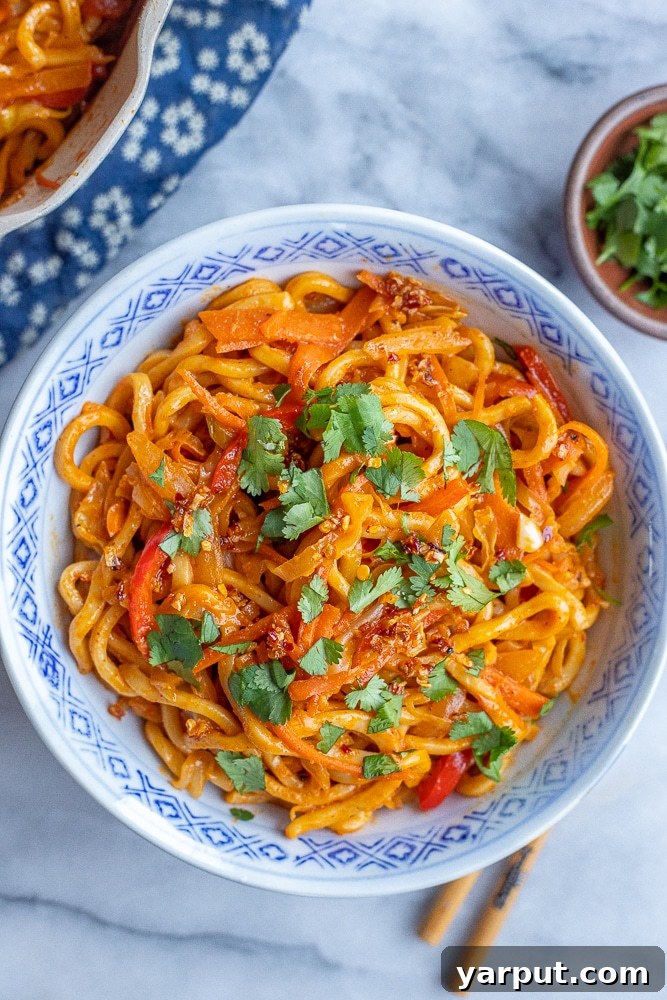
Experience the vibrant flavors of Thailand in your kitchen with these incredibly easy Coconut Red Thai Curry Noodles. A complete meal in under 30 minutes, bursting with aromatic spices and fresh vegetables, perfect on its own or enhanced with your favorite protein.
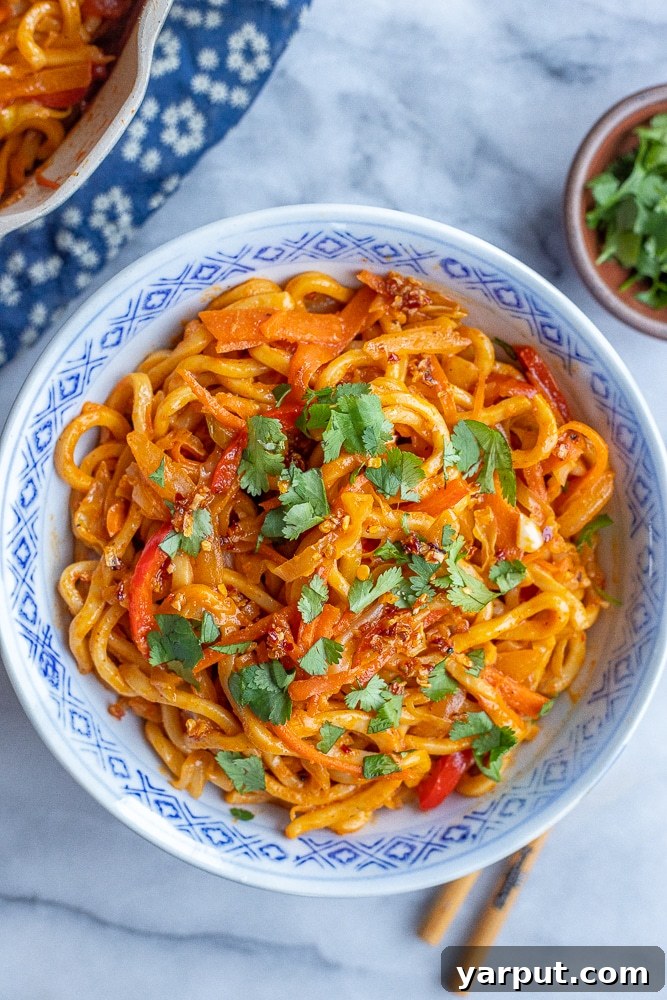
Flavorful 30-Minute Coconut Red Thai Curry Noodles: Your Ultimate Weeknight Vegan Meal
In recent months, my kitchen has transformed into a noodle haven, and these Coconut Red Thai Curry Noodles have quickly ascended to the top of my favorite recipes list! Imagine a dish that’s not only ready in a swift 30 minutes but also requires minimal ingredients while delivering an explosion of authentic Thai-inspired flavor. What makes this recipe truly outstanding is its incredible versatility – it’s a brilliant way to incorporate and enjoy any vegetables you have on hand, transforming forgotten fridge dwellers into a delicious, wholesome meal.
My culinary philosophy has lately gravitated towards maximizing existing pantry and refrigerator staples. This recipe was born from one such mission: to create something extraordinary with the ingredients I already possessed, avoiding another trip to the grocery store. The result is a vibrant, satisfying dish that I hope will become a beloved fixture in your meal rotation, bringing both ease and immense enjoyment to your table.
Essential Ingredients for Your Best Coconut Red Thai Curry Noodles (and Smart Substitutions)
Crafting these delectable noodles is a joy, especially with a clear understanding of each ingredient’s role and potential alternatives. Here’s a comprehensive guide to what you’ll need:
- Fresh Vegetables – This is truly where the recipe shines as a fridge-cleanout champion! I personally love to use thinly sliced green cabbage for its texture, robust yellow onion for its foundational flavor, crunchy carrots for sweetness, and vibrant red bell pepper for color and a touch of fruitiness. However, feel free to get creative! Excellent additions include earthy mushrooms, beautiful purple cabbage, tender broccoli florets, pungent scallions, hearty cauliflower, or even green bell pepper for a different twist. The key is to slice them thinly for quick cooking and uniform texture.
- Unsweetened Coconut Cream – The secret to a rich, creamy curry sauce! I typically opt for a small (around 5.4 oz) can of unsweetened coconut cream, which can often be found in the Asian food aisle of well-stocked supermarkets. If a small can proves elusive, a standard 15-oz can works perfectly; simply measure out what you need. Coconut cream is distinguished from coconut milk by its higher fat content, resulting in a thicker, more luxurious consistency. If only coconut milk is available, choose a full-fat can where the cream and water have separated, then spoon off the thick cream at the top, leaving most of the watery liquid behind.
- Red Thai Curry Paste – This ingredient is a true flavor powerhouse and non-negotiable for authentic taste! You’ll typically locate it in the Asian section of your grocery store. My go-to is often the Thai Kitchen brand, available in a small glass jar. A quick glance at its ingredient list reveals the magic: fiery red chili pepper, aromatic garlic, rich soybean oil, zesty lemongrass, unique galangal (Thai ginger), sea salt, sweet shallot, a medley of spices, and fragrant kaffir lime. This paste provides the complex, spicy, and tangy base for our curry.
- Fresh Garlic and Ginger – While the curry paste contains these aromatics, adding fresh garlic and ginger takes the flavor profile to another level. Their pungent and spicy notes are incredibly complementary to Thai cuisine, infusing the dish with an irresistible fragrance and depth. I strongly advocate for fresh over pre-minced versions for the best results.
- Soy Sauce (or Tamari) – This provides essential umami and saltiness, forming a crucial component of our savory coconut curry sauce. For those following a gluten-free diet, tamari is an excellent and readily available substitute that offers the same depth of flavor. Always taste and adjust according to your preference.
- Pure Maple Syrup – With such bold and savory flavors at play, a touch of sweetness is vital to balance the dish and harmonize all the elements. Maple syrup lends a subtle, natural sweetness that is wonderfully effective. If maple syrup isn’t available, you can easily substitute with coconut sugar, brown sugar, or even a small amount of regular granulated sugar.
- Fresh Lime Juice – A generous squeeze of fresh lime juice just before serving is a game-changer! Its bright, zesty acidity cuts through the richness of the coconut cream and beautifully enhances the notes of the red Thai curry paste, adding an invigorating finish. Do not skip this step for maximum freshness and flavor.
- Optional Garnishes – Elevate your finished dish with a sprinkle of fresh cilantro for a burst of herbaceousness, or a few small spoonfuls of crisp chili oil for an extra kick and textural contrast. Roasted cashews or peanuts also make fantastic additions, providing a delightful crunch and nutty flavor that complements the creamy noodles.
The Nutritional Powerhouse in Every Bowl: Why Your Body Craves These Noodles
Beyond their incredible taste, these Coconut Red Thai Curry Noodles are a celebration of nourishing ingredients. Each spoonful delivers a wealth of benefits that your body will appreciate:
- Healthy Fats for Sustained Energy – The star of our creamy sauce, coconut cream, is an excellent source of Medium-Chain Triglycerides (MCTs). These unique healthy fats are rapidly metabolized by the body, providing a quick and sustained energy boost, and are particularly popular in ketogenic diets. Furthermore, coconut cream is rich in essential electrolytes like potassium, which is vital for nerve function and muscle contraction, and provides beneficial antioxidants that combat oxidative stress.
- Phytochemicals from a Rainbow of Veggies – This curry dish is packed with an array of colorful fruits and vegetables, each a treasure trove of phytochemicals. These potent plant compounds are natural defenders, renowned for their ability to support cellular health, reduce inflammation throughout the body, and bolster the immune system. Studies suggest that a diet rich in phytochemicals can contribute to the prevention of chronic diseases like certain cancers, Alzheimer’s, and diabetes, while also promoting heart health and hormone regulation.
- Garlic’s Miraculous Benefits – Often hailed as a superfood, garlic offers an impressive spectrum of health advantages. From supporting cardiovascular health by helping to lower blood pressure and cholesterol, to its formidable anti-inflammatory and immune-boosting properties, garlic is a tiny but mighty ingredient. It’s also a good source of potassium and various other beneficial compounds that contribute to overall well-being.
- Ginger’s Soothing Touch – Beyond its distinctive flavor, ginger is celebrated for its medicinal properties. It’s a powerful anti-inflammatory and antioxidant, widely used to aid digestion, alleviate nausea, and reduce muscle pain. Its inclusion in this dish not only enhances the taste but also adds an extra layer of health benefits.
Step-by-Step Guide: How to Master Easy Red Thai Curry Noodles with Vegetables
Creating this delicious curry noodle dish is straightforward and incredibly rewarding. Follow these simple steps for a perfect meal every time:
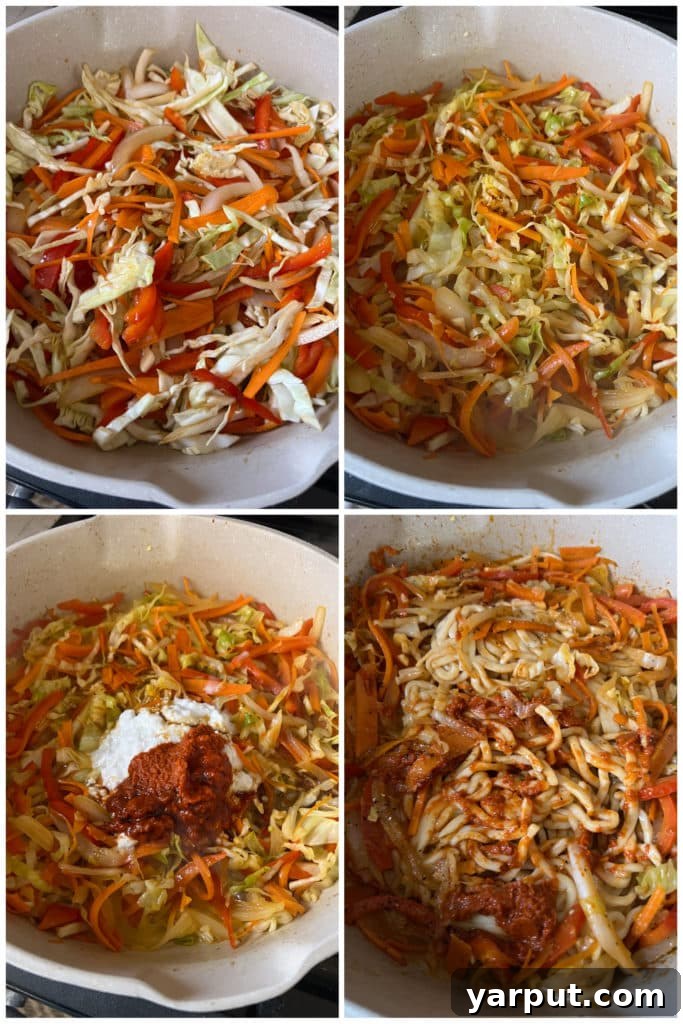
- Sauté Your Aromatics and Veggies: Begin by heating a large skillet or wok over medium heat. Add a few teaspoons of your preferred cooking oil – olive oil, avocado oil, or coconut oil all work wonderfully here. Once the oil is shimmering, add your thinly sliced onion, green cabbage, red bell pepper, and shredded carrot to the pan. To kickstart the seasoning process and help the vegetables soften beautifully, I like to add a quick splash of soy sauce at this stage. Stir everything together well and allow it to cook, stirring occasionally, for about 5 minutes, or until the vegetables have softened to your liking while still retaining a slight bite. Next, introduce your minced garlic and freshly grated ginger, cooking for another 2-3 minutes until fragrant, being careful not to burn the garlic.
- Build the Creamy Curry Sauce: Now it’s time to create the heart of our dish – the rich curry sauce! Pour in the unsweetened coconut cream, then add the potent red Thai curry paste, the remaining soy sauce, and the pure maple syrup. Stir all these ingredients vigorously until they are thoroughly combined and the curry paste is fully dissolved into the creamy coconut base. The aroma at this point will be absolutely incredible!
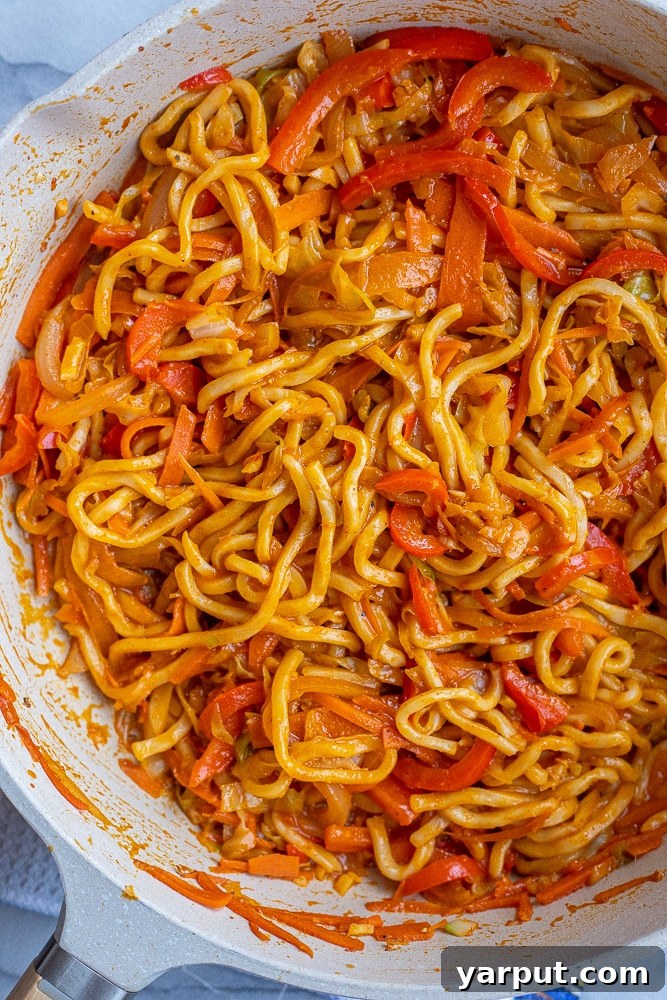
- Combine with Noodles and Finish: Gently add your cooked noodles to the pan. If you’re using pre-cooked noodles like rice noodles, they will quickly and easily integrate into the sauce with a few stirs. If you’re using packaged, block-style cooked noodles (like some ramen or stir-fry noodle varieties), you’ll want to stir and gently break them apart with your tongs or spatula as they warm through and absorb the sauce. I find that ensuring the noodles are fully coated and submerged in the sauce helps them loosen up and become perfectly tender. Once everything is well mixed and heated through, season with salt and freshly ground black pepper to taste.
- The Final Zest: Just before serving, add a generous squeeze of fresh lime juice over the entire dish. This bright acidity elevates all the flavors and provides a wonderful refreshing counterpoint to the rich curry. Alternatively, you can offer lime wedges for individual servings. Garnish generously with fresh cilantro, and if you like a little extra heat and crunch, a sprinkle of crisp chili oil or roasted cashews would be fantastic. Serve immediately and savor every delicious bite!
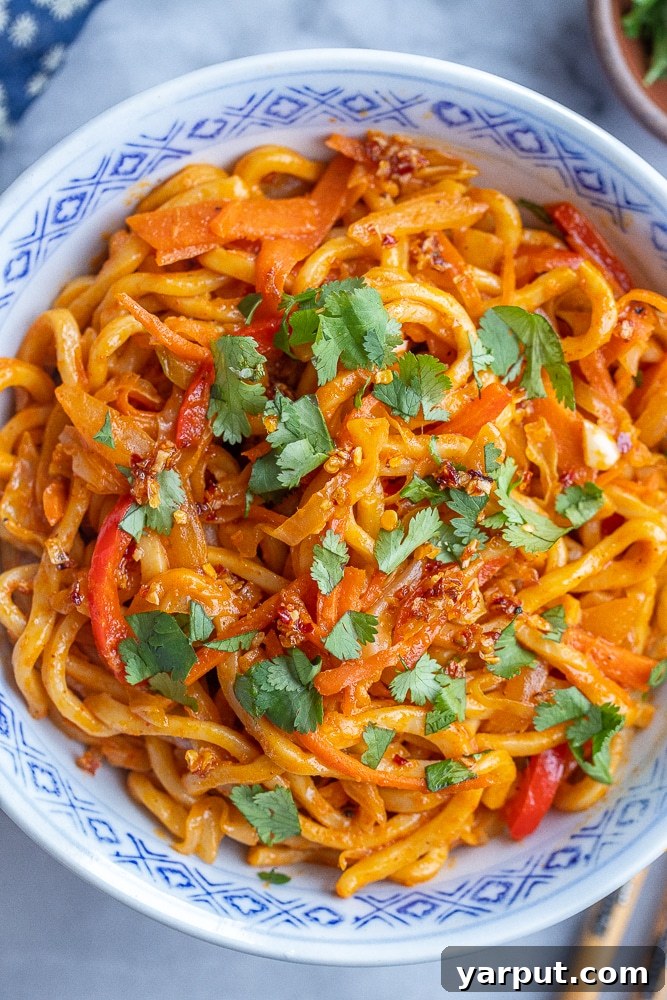
Frequently Asked Questions About Coconut Red Thai Curry Noodles
Here are some common questions about this recipe to help you make it perfectly every time:
- Is this recipe vegan? Absolutely! This recipe is entirely plant-based, relying on vibrant vegetables and rich coconut cream for its delicious flavor and texture, making it perfect for vegan diets.
- Is this recipe gluten-free? The base recipe can easily be made gluten-free with a few simple modifications. While I used wheat noodles in my version, you can readily substitute them with gluten-free alternatives such as rice noodles, zucchini noodles, or even sweet potato noodles. Crucially, ensure you use tamari or a certified gluten-free soy sauce to keep the dish entirely celiac-friendly. Always double-check ingredient labels for hidden gluten.
-
What kind of noodles are best to use? The beauty of this recipe lies in its adaptability! You can truly use any kind of noodles you prefer or have on hand. For a hearty texture that stands up well to the creamy sauce, I often lean towards thicker noodles like udon. However, thin noodles would also be fantastic. Other excellent choices include:
- Udon noodles: Thick, chewy, and satisfying.
- Rice noodles: A classic choice for Thai cuisine, available in various thicknesses.
- Spaghetti noodles: A readily available pantry staple for an East-meets-West fusion.
- Ramen noodles: Quick-cooking and great for soaking up the sauce.
- Spiralized vegetable noodles: For a lighter, lower-carb option (e.g., zucchini or carrot noodles).
Just ensure they are cooked according to package directions before adding them to the curry.
- Is there a substitute that can be used for the red Thai curry paste? Unfortunately, there isn’t a direct or easy substitute for red Thai curry paste if you’re aiming for that authentic, complex flavor profile. It’s a unique blend of specific spices and aromatics that is difficult to replicate with individual ingredients. If you can’t find it at your local store, consider checking an Asian specialty market or ordering it online. The only true substitute would be making your own homemade red Thai curry paste from scratch, which is a more involved process.
- Can this meal be frozen? Yes, this recipe is quite freezer-friendly! To freeze, allow the dish to cool completely, then transfer it to an airtight, freezer-safe container. It can be stored in the freezer for up to three months. When you’re ready to enjoy, simply reheat it gently on the stovetop over low-medium heat, adding a splash of water or vegetable broth if needed to loosen the sauce, or microwave until thoroughly heated.
- How long do leftovers last in the refrigerator? When stored properly in an airtight container in the refrigerator, any delicious leftovers of these Coconut Red Thai Curry Noodles will remain fresh and tasty for about four days. This makes it an excellent option for meal prepping throughout the week!
- Can I adjust the spice level? Absolutely! The spice level primarily comes from the red Thai curry paste. For a milder dish, start with 2 tablespoons of paste and add more to taste. For those who love heat, feel free to add an extra tablespoon or two. You can also add a pinch of red pepper flakes during cooking or a drizzle of chili oil as a garnish to boost the spice in individual servings.
- What proteins can I add? If you’re not strictly vegetarian or vegan, this dish pairs wonderfully with a variety of proteins. Sautéed chicken breast or thighs, tender shrimp, or flaky white fish would all be excellent additions. For a vegan protein boost, pan-fried tofu or tempeh cubes are fantastic, soaking up the curry sauce beautifully. Edamame or chickpeas can also be stirred in for added plant-based protein.
Have more questions that weren’t answered here? Feel free to ask in the comment section below, and I’ll be happy to assist you!
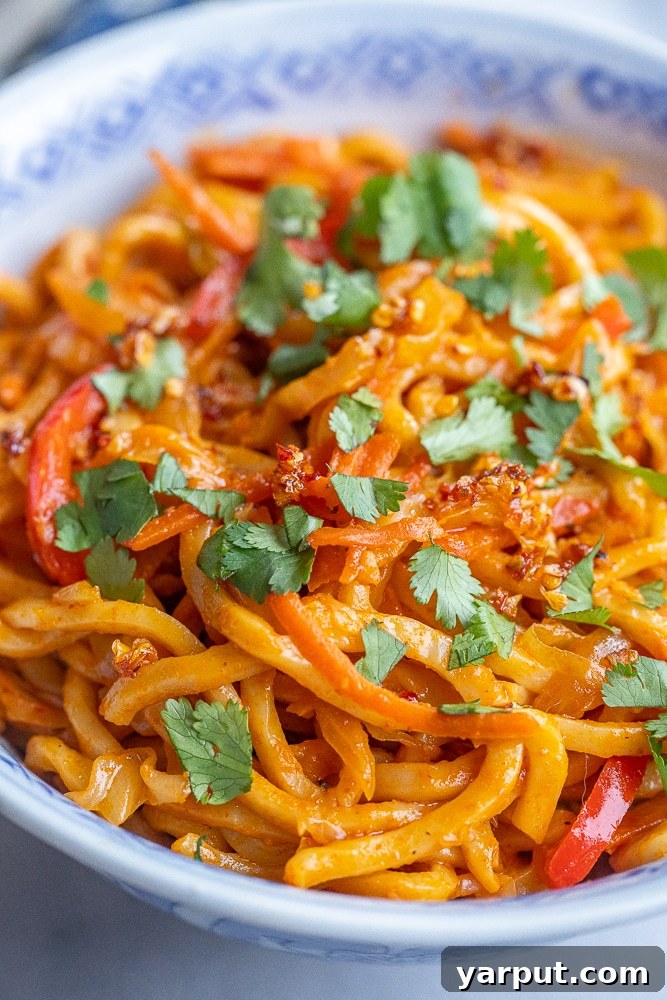
Explore More Delicious Vegan Asian-Inspired Recipes!
If you loved these Coconut Red Thai Curry Noodles, you’re in for a treat! Here are more of my favorite Asian-inspired plant-based dishes that are sure to tantalize your taste buds and add exciting flavors to your kitchen:
- Easy Scallion Soy Noodles
- Sesame Ginger Noodles with Veggies
- Sticky Ginger Cashew Tofu
- Cucumber Edamame Salad
- Crispy Teriyaki Cauliflower
Print

Coconut Red Thai Curry Noodles with Vegetables
5 Stars
4 Stars
3 Stars
2 Stars
1 Star
5 from 2 reviews
Author: She Likes Food
Total Time: 30 minutes
Yield: 4 1x
Diet: Vegan
Description
These Coconut Red Thai Curry Noodles are deceptively easy to make and packed full of so much flavor! They are ready in 30 minutes and are great on their own or with a protein like tofu or chicken (if not vegetarian). They’re also an excellent way to use up fresh vegetables from your fridge!
Ingredients
Scale
- 2 teaspoons oil of choice (olive, avocado, or coconut oil)
- 1 medium red bell pepper, thinly sliced (bite-sized pieces are ideal for stir-fry)
- 2–3 cups shredded green cabbage
- 1 cup shredded carrots
- 1/2 large yellow onion, thinly sliced
- 2–3 cloves fresh garlic, minced
- 1 teaspoon freshly grated ginger
- 1 (5.4 oz) can unsweetened coconut cream (if using a 15 oz can, use approximately 1/3 to 1/2 of it)
- 3 tablespoons red Thai curry paste, or more to achieve desired spice and flavor
- 2 teaspoons pure maple syrup (or brown sugar, coconut sugar)
- 2 tablespoons soy sauce (use tamari for a gluten-free option), or more to taste
- About 14–15 oz stir fry noodles, pre-cooked noodles (such as rice noodles, ramen, udon, or spaghetti)
- Fresh lime juice, to taste
- Optional garnishes: fresh cilantro, crisp chili oil, roasted cashews or peanuts
Instructions
- Sauté Vegetables: Heat a large pan or wok over medium heat. Add 2 teaspoons of olive oil or your chosen oil. Add the thinly sliced onion, green cabbage, red bell pepper, and shredded carrot. Introduce a splash of soy sauce, mix thoroughly, and cook for approximately 5 minutes, or until the vegetables begin to soften but still retain a pleasant crunch. Next, add the minced garlic and grated ginger, continuing to cook for another 2-3 minutes until fragrant.
- Create the Curry Sauce: Pour in the full can of unsweetened coconut cream, then stir in the red Thai curry paste, additional soy sauce (or tamari), and the pure maple syrup. Mix all the ingredients until they are perfectly combined and the curry paste has completely blended into a smooth, aromatic sauce.
- Combine with Noodles: Add your cooked stir-fry noodles to the pan. If using pre-cooked fresh noodles (like rice noodles), they will incorporate quickly. For block-style packaged noodles, gently stir and break them apart as they warm and absorb the sauce. Ensure all noodles are thoroughly coated in the rich curry sauce.
- Season and Serve: Once all ingredients are well mixed and heated through, season the dish with salt and freshly ground black pepper to taste. Finish with a generous squeeze of fresh lime juice over the entire dish, or allow guests to add it to their individual portions. Garnish with fresh cilantro, and optionally, crisp chili oil or roasted nuts for extra flavor and texture. Serve immediately and enjoy!
- Prep Time: 10 mins
- Cook Time: 20 mins
- Category: Dinner, Vegan, Noodle Dish
- Method: Stovetop, Stir-fry
- Cuisine: Thai-Inspired, Asian