
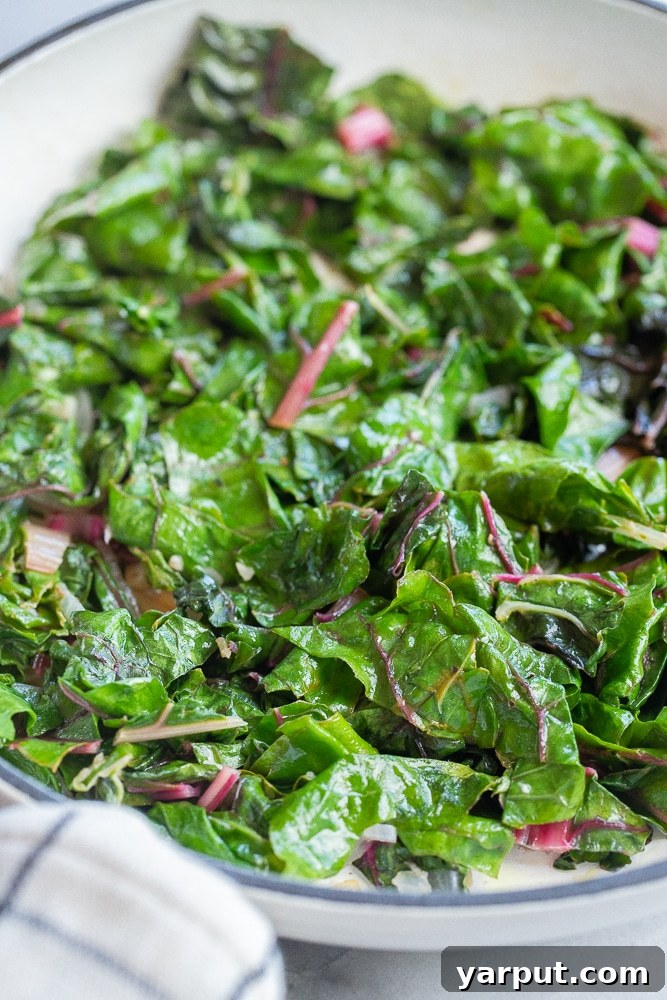
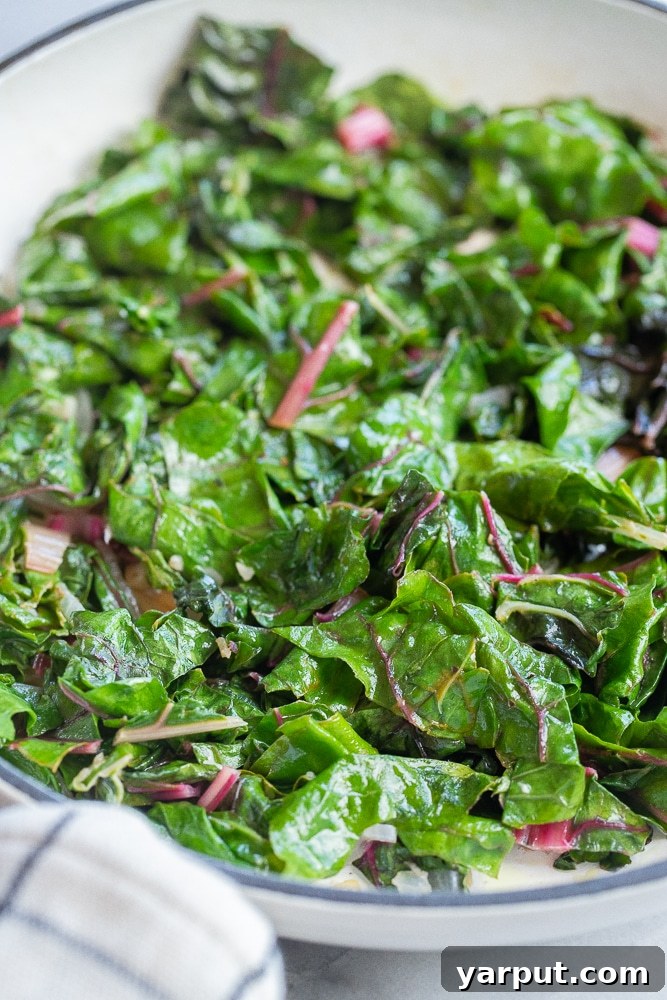
Discover the simplest yet most flavorful way to prepare fresh Swiss chard with this Easy Sautéed Swiss Chard Recipe. Whether it’s straight from your garden or picked up at the market, this dish highlights the natural goodness of chard with minimal ingredients. Perfect as a vibrant side, a nutritious addition to grain bowls, or a healthy snack throughout your day.
The Delight of Garden-Fresh Swiss Chard
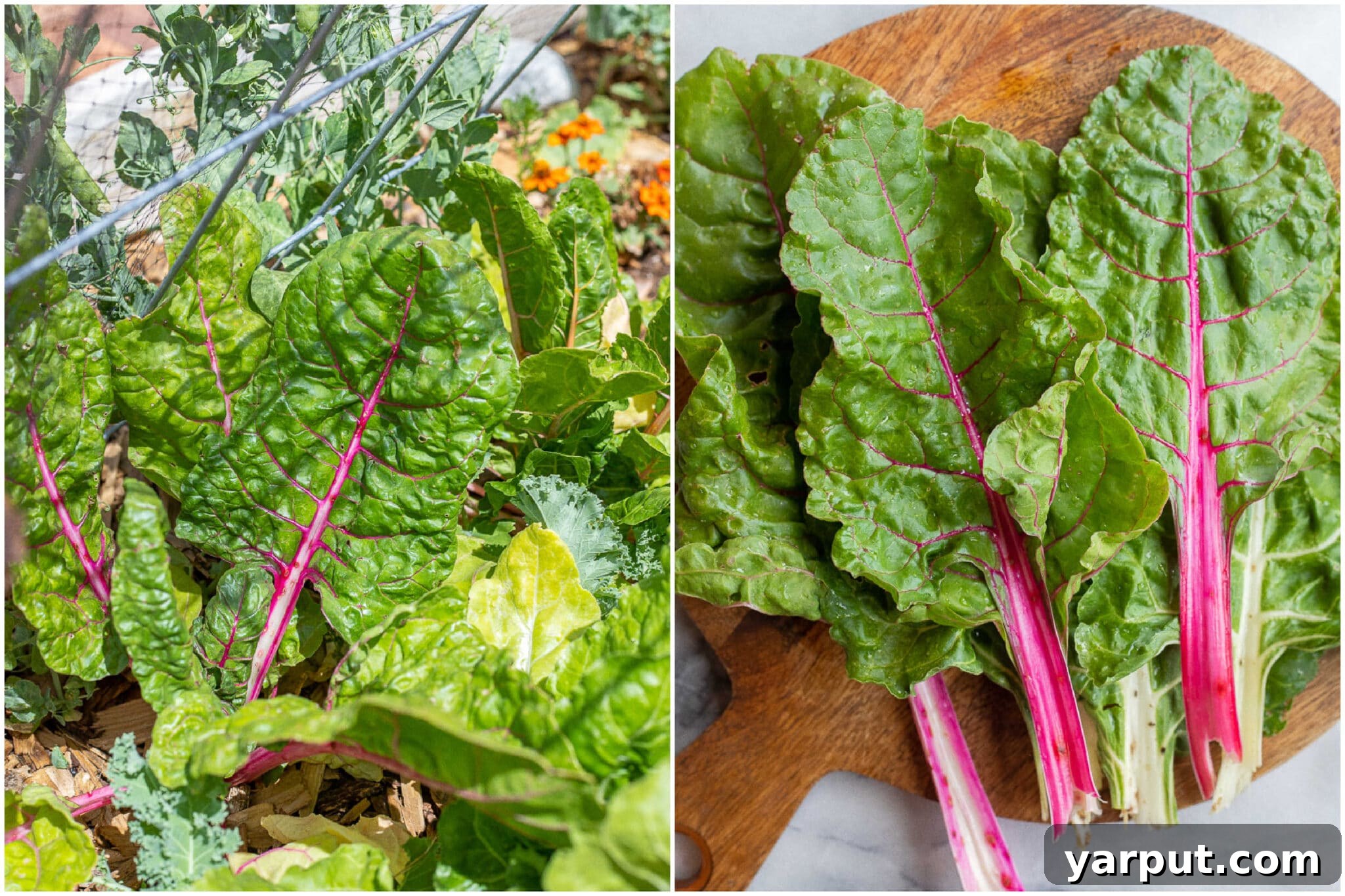
There’s an unparalleled joy in harvesting your own produce, and Swiss chard is truly a garden star. Just a couple of months ago, I planted six small Swiss chard starts, and now they’ve truly thrived! Their leaves have grown remarkably large and vibrant, signaling that it’s time to bring them into the kitchen. This Easy Sautéed Swiss Chard recipe isn’t just my go-to preparation method; it’s a celebration of this incredible leafy green. It requires only a handful of common ingredients, yet consistently delivers a dish that’s both delicious and incredibly satisfying. The beauty of sautéing is its simplicity, allowing the earthy, slightly sweet flavor of the chard to shine through without being overwhelmed.
Growing your own Swiss chard offers more than just fresh ingredients; it provides a connection to your food source and ensures peak freshness and nutrient content. The vibrant colors of rainbow chard alone can brighten any garden plot and subsequently, any plate. This recipe is designed to honor that freshness, transforming simple leaves and stems into a dish that’s both comforting and elegant. It’s a testament to how quick, wholesome meals can be crafted from the ground up.
Why This Easy Sautéed Swiss Chard Recipe Stands Out
This isn’t just another side dish; it’s a versatile, healthful, and incredibly simple recipe that will quickly become a staple in your culinary repertoire. Here’s why you’ll absolutely adore this delicious Swiss chard preparation:
- Effortlessly Simple & Lightning Fast: Forget complicated cooking. This vibrant vegetable side dish comes together in less than 15 minutes, making it an ideal choice for busy weeknights or when you need a quick, healthy boost. With minimal ingredients and straightforward steps, it’s a recipe you can whip up on a whim.
- The Perfect Way to Enjoy Swiss Chard: If you’re blessed with an abundance of Swiss chard in your garden, or simply love incorporating this nutritious green into your diet, this recipe is a game-changer. It beautifully highlights the chard’s unique texture and flavor, offering a delightful alternative to raw greens. You can easily adjust the quantity to prepare as much or as little as you desire.
- A Nutritional Powerhouse for Your Plate: Swiss chard is far more than just a tasty green; it’s packed with essential nutrients. Rich in dietary fiber, it supports healthy digestion and keeps you feeling full. It’s an excellent source of Vitamin K, crucial for bone health and blood clotting, and also provides significant amounts of Vitamins A and C, magnesium, potassium, and beneficial antioxidants. Incorporating Swiss chard regularly can contribute to improved heart health, better blood sugar regulation, and reduced inflammation, making this dish a smart choice for a balanced diet.
- Incredibly Versatile: While superb on its own, sautéed Swiss chard is a chameleon in the kitchen. It can elevate a simple meal or complement a more elaborate spread. Its mild, earthy flavor pairs well with a variety of cuisines and dishes, from pasta to eggs, and beyond.
Essential Ingredients for Flavorful Sautéed Swiss Chard
The beauty of this recipe lies in its simplicity. A few high-quality ingredients are all you need to transform Swiss chard into a culinary delight. Each component plays a crucial role in balancing and enhancing the chard’s natural goodness.
- Swiss Chard: The star of our dish! If you’re harvesting from your garden, pick fresh, crisp leaves. When buying, look for vibrant, unblemished leaves and firm, colorful stems. While green Swiss chard is common, don’t hesitate to try rainbow or red chard for added visual appeal and a slightly different flavor profile. The stems are entirely edible and add a wonderful crunch, so don’t discard them! If Swiss chard isn’t available, this recipe works beautifully with other dark leafy greens like kale (massage it first for tenderness), spinach, or collard greens, though cooking times may vary slightly.
- Olive Oil: A staple for sautéing, olive oil imparts a subtle fruity and peppery note that complements greens beautifully. Extra virgin olive oil offers the richest flavor, but a lighter olive oil or even avocado oil can be used. If you’re looking to reduce oil, you can certainly sauté the chard with a splash of water or vegetable broth instead, opting for a steam-sauté method.
- Onion: This aromatic vegetable adds a delicate sweetness and depth to the sautéed greens that makes them irresistible. While yellow onion is my preference for its balanced flavor, any type of onion – white, red, or even shallots – will work wonderfully. Slicing it thinly ensures it cooks down nicely and melds with the chard.
- Garlic: A non-negotiable for many savory dishes, fresh garlic provides a pungent, aromatic kick that pairs exceptionally well with cooked greens. I tend to be generous with garlic when sautéing, so feel free to adjust the amount to your liking – from one clove for a subtle hint to three or four for a bolder flavor. If fresh garlic isn’t on hand, a small amount of garlic powder can be used, though it will offer a milder flavor profile.
- Lemon Juice: A squeeze of fresh lemon juice at the end is like a magic wand for sautéed greens. It brightens the entire dish, cutting through any slight bitterness of the chard and lifting all the flavors. Always use fresh lemon juice for the best results; bottled lemon juice just doesn’t compare in vibrancy. Adjust the amount to your preference for tartness.
- Salt and Black Pepper: Simple yet essential seasonings. They bring out the natural flavors of the chard and aromatics. I highly recommend freshly cracked black pepper for its superior aroma and flavor compared to pre-ground pepper. For those who enjoy a little heat, a pinch of red pepper flakes added with the garlic can provide a delightful spicy kick.
Mastering the Art of Sautéing Swiss Chard: Step-by-Step Guide
Creating perfectly sautéed Swiss chard is surprisingly simple, yet a few key steps ensure the best texture and flavor. Follow these easy instructions for a flawless result every time.
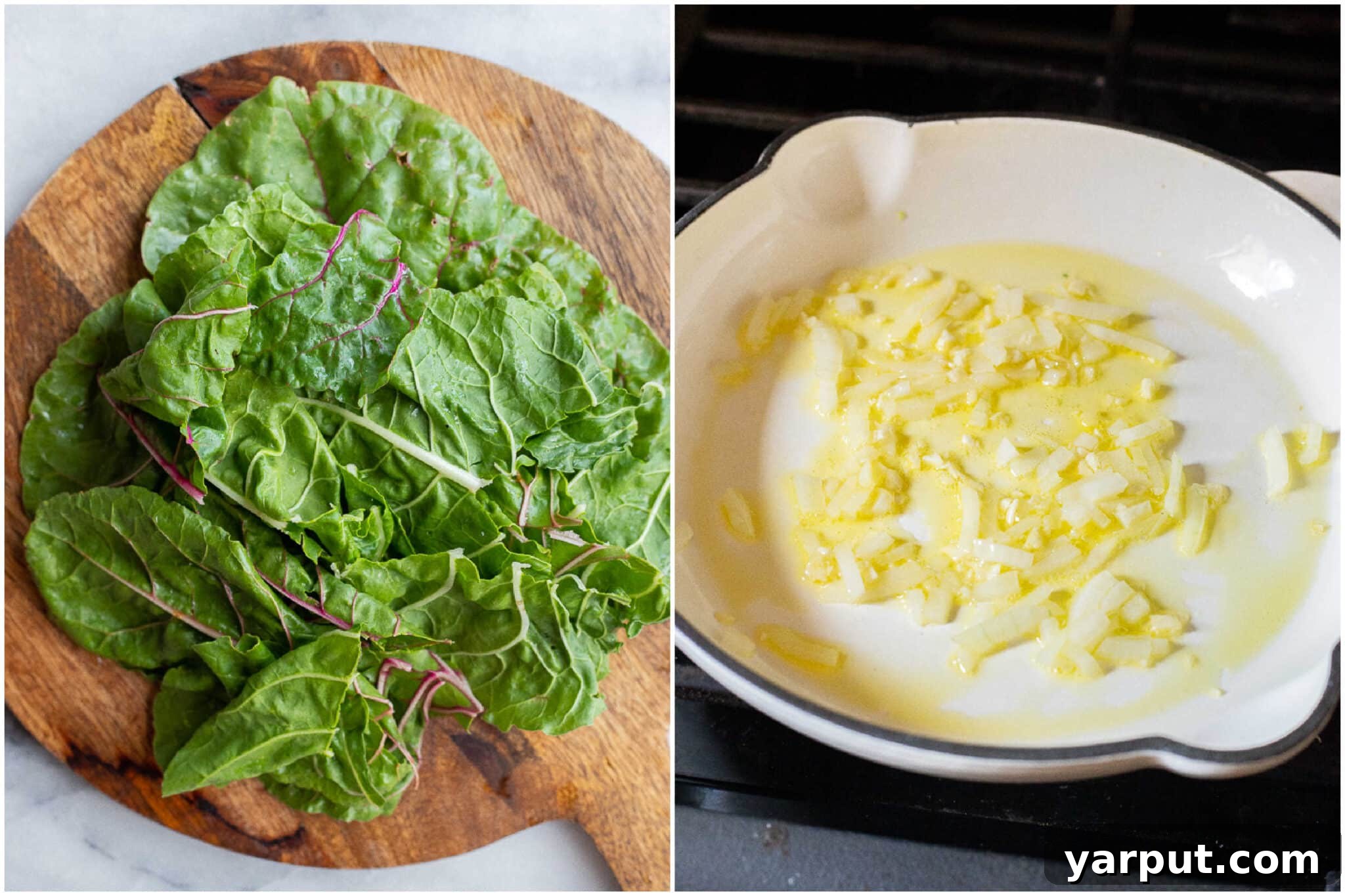
- Prepare Your Swiss Chard: Begin by thoroughly washing your Swiss chard leaves under cold running water to remove any dirt or grit. Gently pat them dry with a clean kitchen towel or use a salad spinner. Once clean, separate the firm stems from the leaves. Since the stems are edible and delicious, thinly slice them into small, coin-like pieces. Then, chop the vibrant Swiss chard leaves into bite-sized ribbons or squares. Keeping the stems and leaves separate for now is important, as they have different cooking times.
- Sauté the Aromatics and Stems: Heat a large skillet (a 10-12 inch pan works well) over medium heat. Once hot, add the olive oil. As soon as the oil shimmers, add the thinly sliced Swiss chard stems and chopped yellow onion. Sauté for about 1-2 minutes, stirring occasionally, until the onions begin to soften and become translucent and the stems are slightly tender-crisp. This initial step allows these harder components to cook through and release their aromatic flavors.
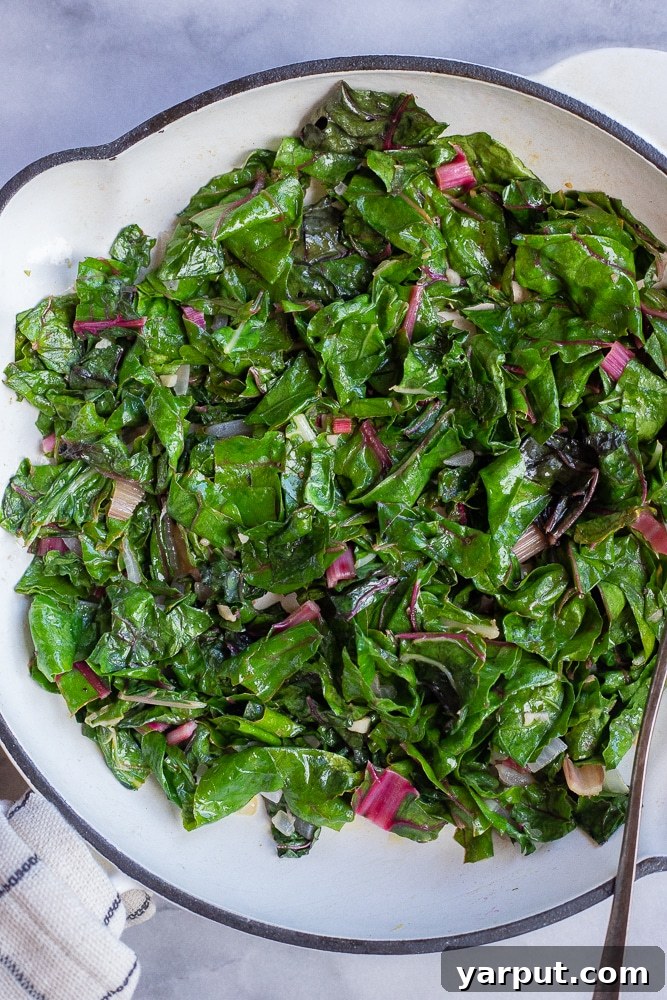
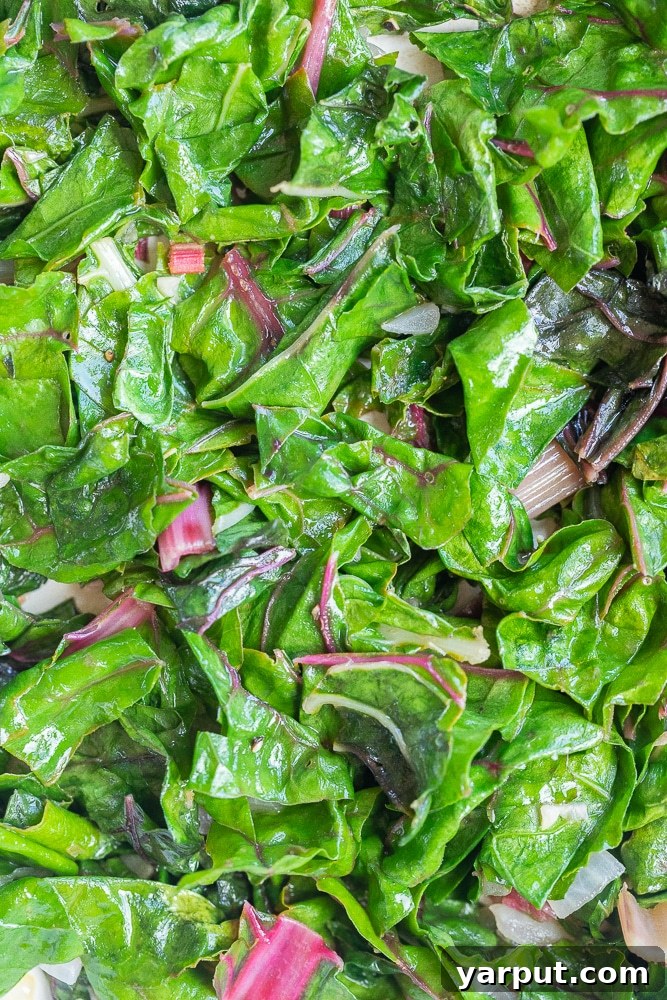
- Introduce the Leaves and Garlic: Now, add the minced garlic to the pan and cook for just 30 seconds until fragrant, being careful not to burn it. Immediately add the chopped Swiss chard leaves, along with a generous pinch of salt and freshly cracked black pepper. The pan will look very full, but the leaves will quickly wilt down. Continue to cook, stirring frequently, until the Swiss chard leaves are vibrant green, tender, and wilted to your desired doneness. This typically takes only 1-3 minutes. If you prefer them very soft, you can cook for an extra minute.
- Finish and Serve: Turn off the heat. Squeeze fresh lemon juice directly over the sautéed chard. Stir gently to combine. Taste and adjust seasonings if necessary, adding more salt, pepper, or lemon juice to your preference. Serve immediately and enjoy the fresh, wholesome flavors!
Versatile Serving Suggestions & Creative Pairings
This Easy Sautéed Swiss Chard is so much more than just a simple side. Its delightful flavor and tender texture make it incredibly versatile. Here are some ideas to incorporate it into your meals:
- Classic Side Dish: Serve alongside grilled chicken, roasted fish, pan-seared tofu, or a hearty steak. Its lightness perfectly balances richer main courses.
- Grain Bowl Booster: Add a generous serving of sautéed chard to your favorite grain bowls, alongside quinoa, brown rice, roasted vegetables, and a protein source for a complete and nutritious meal.
- Egg Dishes: Fold it into scrambled eggs or an omelet for a healthy breakfast or brunch. It’s also fantastic as a topping for poached eggs on toast.
- Pasta Perfection: Toss the sautéed chard with pasta, a drizzle of olive oil, and some Parmesan cheese (or nutritional yeast for a vegan option) for a quick, wholesome meal. Add some sun-dried tomatoes or toasted pine nuts for extra flavor and texture.
- Soups and Stews: Stir it into soups, stews, or lentil dishes during the last few minutes of cooking for added nutrients and fresh greens.
- Savory Tarts & Quiches: Use it as a filling for quiches, frittatas, or savory tarts, often paired with feta cheese or goat cheese.
- Sandwiches and Wraps: Layer it into sandwiches, wraps, or even flatbreads for a burst of flavor and a boost of greens.
Frequently Asked Questions About Sautéed Swiss Chard
Here are some common questions and helpful answers to ensure your sautéed Swiss chard turns out perfectly every time:
- Is this sautéed Swiss chard recipe suitable for specific diets?
Yes! This recipe is naturally both vegan and gluten-free, making it a fantastic option for a wide range of dietary needs. It relies on wholesome plant-based ingredients and contains no gluten-containing components. - What if I’m not vegan or gluten-free? Can I add other ingredients?
Absolutely! While delicious as is, you can certainly customize it. For an extra layer of flavor and texture, consider sprinkling some freshly grated Parmesan cheese on top just before serving. Toasted breadcrumbs or chopped, crispy bacon bits also make excellent additions. A drizzle of balsamic glaze can also add a touch of sweet tanginess. - Can I substitute other greens for Swiss chard in this recipe?
Yes, definitely! If Swiss chard isn’t available, or if you simply prefer another leafy green, you can easily use kale, spinach, or collard greens. Keep in mind that cooking times may vary slightly. Spinach will cook much faster, often in just 1-2 minutes. Kale and collard greens are tougher and might require a bit more cooking time (5-7 minutes) and possibly a splash of water or broth to help them tenderize. - How many servings does this recipe make?
This recipe, as written, typically yields about 2-4 servings, depending on whether it’s served as a generous side dish or a smaller accompaniment. It’s incredibly easy to scale up or down; simply adjust the amount of Swiss chard and other ingredients proportionally to feed more or fewer people. - How long do leftovers last, and how should I store them?
Leftover sautéed Swiss chard should be stored in an airtight container in the refrigerator. When properly stored, it will typically last for about 3-4 days. For reheating, you can gently warm it in the microwave or, for best results, reheat it in a skillet on the stovetop over medium-low heat with a tiny splash of water or oil until warmed through. Avoid overcooking, as this can make the chard mushy. - Can I add other vegetables to this dish?
Absolutely! Feel free to add thinly sliced bell peppers, mushrooms, or cherry tomatoes to the skillet along with the onions and chard stems. This can add more nutrients, color, and texture to your dish. - Are there other spices or herbs I can use?
Certainly! While simple seasoning lets the chard shine, a pinch of red pepper flakes adds heat, a touch of smoked paprika can lend a subtle smokiness, or dried Italian herbs can add an aromatic complexity. Fresh herbs like thyme or rosemary can also be added with the garlic for a fragrant twist.
Still have a question I didn’t answer? Feel free to ask me in the comment section below, and I will get back to you as soon as possible!
Looking For More Easy Vegetable Side Dish Recipes?
Expand your repertoire of delicious and healthy vegetable sides with these fantastic recipes:
Tahini Roasted Broccoli
Best Roasted Zucchini
Caramelized Pan Fried Summer Squash
Best Easy Green Bean Recipe
Delicious 5 Minute Dinner Salad
Easy Sautéed Swiss Chard
Author: She Likes Food
Total Time: 17 minutes
Yield: 2-4 servings
Diet: Vegan
Description
If you have extra Swiss chard in the garden, this Easy Sautéed Swiss Chard Recipe is the perfect thing to make with it. The ingredients are simple, yet super flavorful, and really allow the Swiss chard to shine. Enjoy as a side dish, add it to bowls, or make a big pan and snack on it throughout the day.
Ingredients
- 1 large bunch Swiss chard
- 1 tablespoon extra virgin olive oil
- 1/4 cup chopped yellow onion
- 1-2 cloves garlic, minced
- Fresh lemon juice, for squeezing on top
- Salt and black pepper, to taste
Instructions
- Wash and gently dry your Swiss chard. The stems are edible, so you can cut them off and then thinly slice them. Then, chop the Swiss chard leaves into bite-sized pieces. Keep chopped stems and leaves separate.
- Heat a large skillet over medium heat and add the olive oil. Once oil is hot, add the stems and the onion and cook for about 1 minute.
- Next, add in the garlic, Swiss chard leaves, salt, and pepper. Cook until Swiss chard leaves are wilted and to your desired doneness, 1-3 minutes but can be cooked longer if you prefer.
- Turn the heat off, squeeze in the fresh lemon juice, and enjoy!
- Prep Time: 10 mins
- Cook Time: 7 mins
- Category: Side, Vegan
- Method: Stovetop
- Cuisine: American