
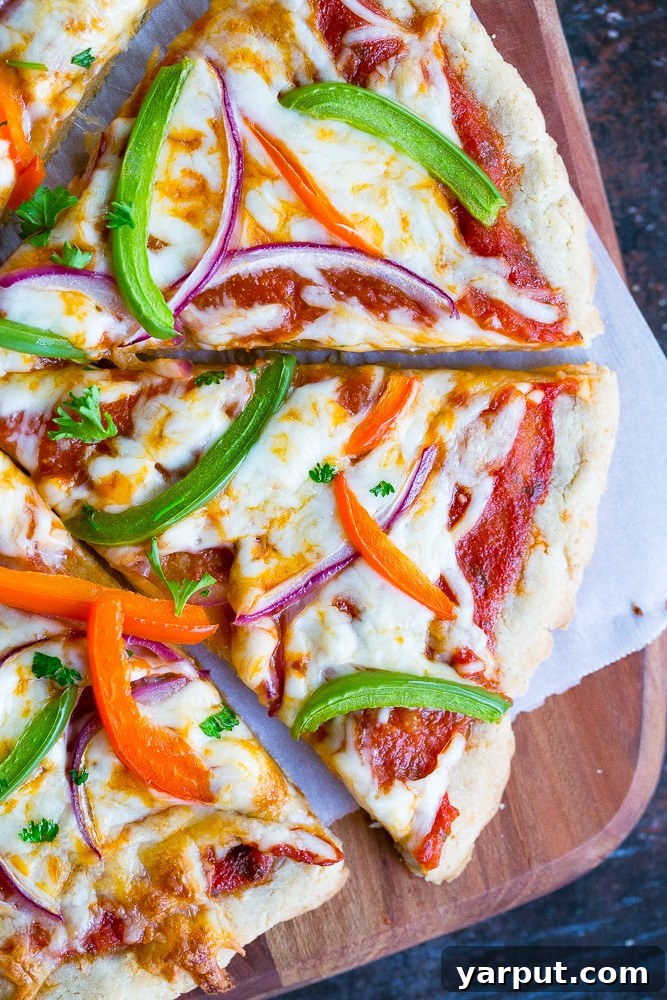
Crafting the Perfect Gluten-Free Pizza Crust: Chewy, Buttery, and Irresistibly Easy
This homemade gluten-free pizza crust is a game-changer! Perfectly chewy, incredibly delicious, and ready to be loaded with all your favorite toppings. Say goodbye to bland, expensive alternatives and hello to your new go-to pizza night solution.
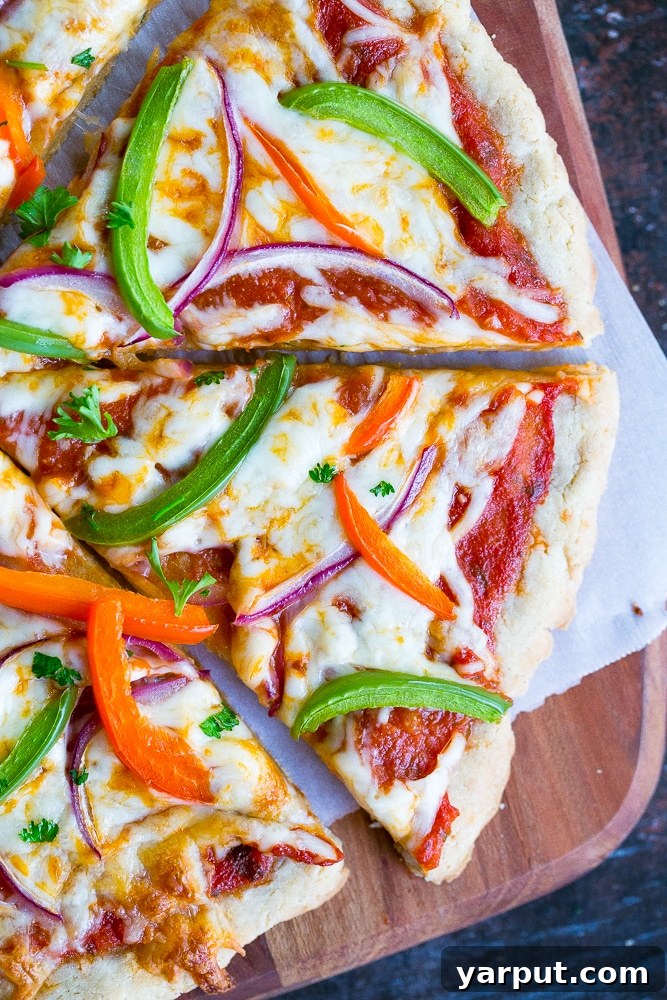
For anyone navigating a gluten-free lifestyle, the quest for a truly satisfying pizza can feel like an endless journey. We’ve all been there: scanning freezer aisles for an edible (yet often overpriced and undersized) option, or trying countless gluten-free pizza crust mixes that promise perfection but deliver little more than a dry, crumbly, or frankly, cardboard-like experience. The dream of a deeply flavorful crust, with that ideal chewiness and a hint of crispness, often feels just out of reach. But what if I told you that the best gluten-free pizza crust you’ll ever taste isn’t found in a box or frozen section, but can be easily made right in your own kitchen?
The Gluten-Free Pizza Challenge: Taste, Texture, and Cost
The struggle is real for gluten-free pizza aficionados. Conventional pizza boasts a glorious chew thanks to gluten, the protein that gives dough its elasticity and structure. Replicating this without gluten is a culinary art form, and many commercial gluten-free products fall short. They often lack the signature bounce and tender interior, resulting in a dense, heavy crust or one that crumbles at the slightest touch. Beyond texture, flavor can also be an issue; some mixes leave an undesirable aftertaste, making the entire pizza experience less enjoyable. And then there’s the price tag. A decent frozen gluten-free pizza can easily cost upwards of $10 for a single serving, which is hardly sustainable for regular pizza nights, especially if you’re feeding more than one person.
My personal journey through the world of gluten-free pizza was filled with similar disappointments. I experimented with various store-bought crusts and mixes, hoping to find “the one.” While some were marginally better than others, none truly captured the essence of what I craved in a pizza: that perfectly buttery, slightly crispy, and wonderfully chewy base that holds up to generous toppings and, crucially, tastes fantastic even the next day. Because let’s be honest, cold pizza leftovers are a sacred tradition, and a good pizza crust should excel at this too!
Even as more brands began offering gluten-free options, I found the cost prohibitive. I recall one particular frozen pizza that my husband declared “better than regular pizza”—a high compliment indeed! But at $10 for a small, single-serving pie that left us both still hungry, it was impossible to justify as a regular purchase. My philosophy has always leaned towards making things from scratch whenever possible, giving me control over ingredients and saving money. It became clear that if I wanted truly satisfying, affordable, and delicious gluten-free pizza, I would have to create the perfect recipe myself. And that’s precisely what led to this incredible homemade gluten-free pizza crust.
Unveiling the Best & Easiest Gluten-Free Pizza Crust
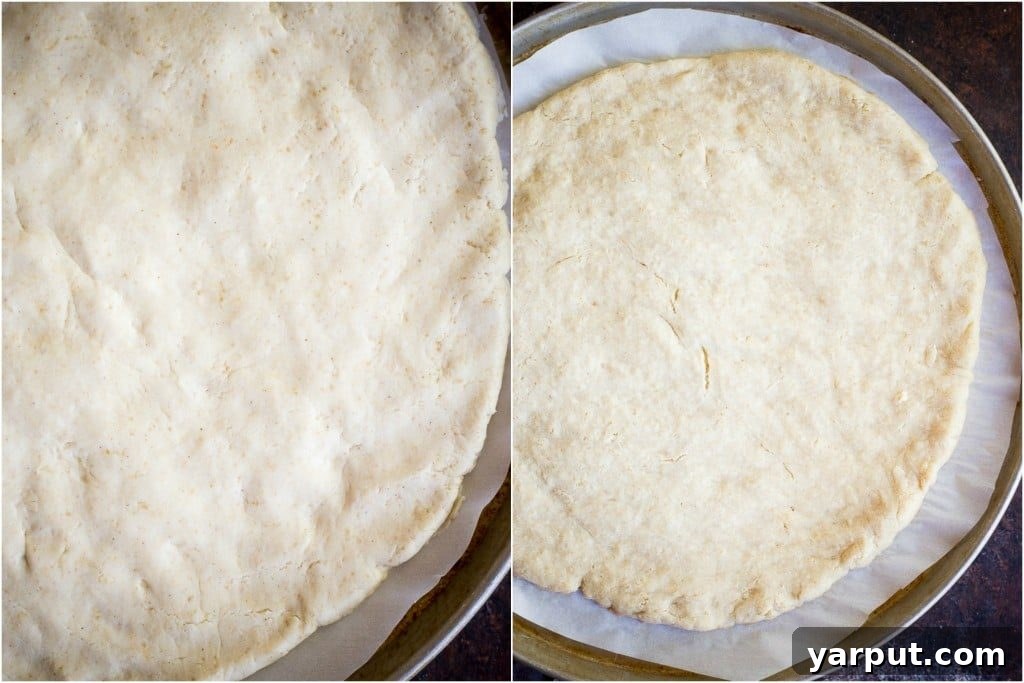
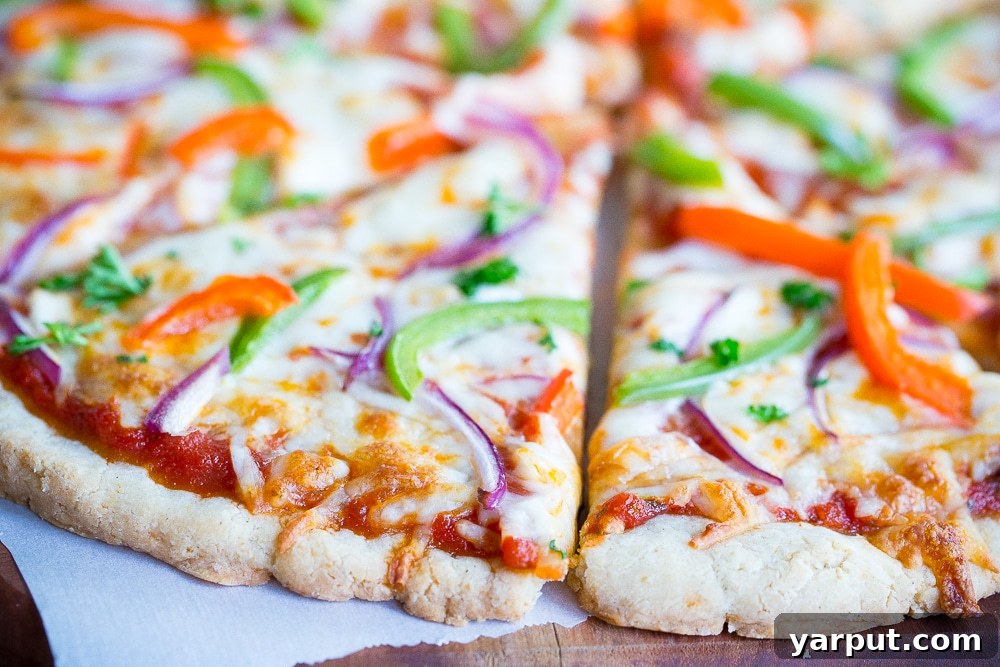
I proudly call this “The Best and Easiest Gluten-Free Pizza Crust” because it truly delivers on both fronts. This recipe consistently produces a crust that is everything you could wish for: perfectly chewy on the inside, beautifully crispy on the outside, and wonderfully buttery in flavor. The dough is incredibly versatile, allowing you to achieve your desired thickness, whether you prefer a thin, crackly base or a slightly thicker, more substantial crust. What makes it genuinely easy is the straightforward process: simply combine all the ingredients in a bowl, form the dough into a ball, let it rest for just 30 minutes, and then it’s ready to be shaped and baked. No complicated kneading, no tricky rise times, just pure pizza perfection waiting to happen!
Developing this recipe involved numerous rounds of testing, tweaking ingredients and ratios until I hit upon the ideal combination. Sometimes, after repeated recipe testing, one can grow tired of a dish, but I can honestly say that even after testing this gluten-free pizza crust over ten times, I’m still not tired of it. Each batch was a delight, proving its consistent deliciousness and ease of preparation. This recipe isn’t just a substitute for gluten-filled pizza; it’s a stand-alone masterpiece that will satisfy all your pizza cravings, offering a comforting, familiar taste and texture without any of the gluten-related worries.
Tips for Gluten-Free Pizza Crust Success
Achieving the perfect gluten-free pizza crust involves a few simple considerations that will elevate your pizza night experience. Firstly, the choice of gluten-free flour makes a significant difference. As highlighted in the notes below, a good quality 1:1 gluten-free baking flour, like Bob’s Red Mill, is crucial for the best results. These blends often contain a mix of starches and flours, along with binders like xanthan gum, which mimic gluten’s properties, providing elasticity and preventing a crumbly texture. If you use a different blend, you might need to adjust the liquid or flour slightly to achieve the right dough consistency.
Secondly, don’t be afraid to experiment with the thickness. While the recipe suggests a thinner crust for optimal cooking, you can certainly try a slightly thicker one. Just remember that a thicker crust might require a longer par-baking time to ensure it cooks through evenly without becoming doughy in the middle. Pressing the dough evenly across your pizza pan is key to uniform baking. A thin, even layer promotes crispiness and ensures all parts of the crust cook at the same rate. Using parchment paper is also highly recommended, as it prevents sticking and makes transferring the pizza a breeze.
Another fantastic aspect of this homemade gluten-free pizza dough is its freezer-friendly nature. You can easily make a double or triple batch and freeze portions of the dough for future pizza nights. Simply wrap the dough balls tightly in plastic wrap and store them in an airtight freezer bag for up to a few weeks. When you’re ready to use them, thaw the dough in the refrigerator overnight or at room temperature for a few hours until pliable. This makes spontaneous pizza cravings much easier to satisfy without starting from scratch every time.
Lastly, customize your pizza with abandon! Once your crust is par-baked and firm, it’s a blank canvas for your favorite sauces, cheeses, and an array of toppings. From classic marinara and mozzarella to gourmet combinations with pesto, roasted vegetables, or unique cheeses, this robust crust can handle it all. Remember to avoid overloading the pizza, especially with watery toppings, to prevent a soggy crust. A lighter hand with sauce and proper draining of certain ingredients can make a big difference in the final crispy texture.
Making your own gluten-free pizza crust isn’t just about avoiding gluten; it’s about reclaiming the joy of homemade pizza. It’s about the satisfaction of creating something delicious from scratch, tailoring it to your exact preferences, and sharing it with loved ones—without the compromise of taste, texture, or an exorbitant price tag. This recipe simplifies the process, ensuring that even novice bakers can achieve a truly exceptional gluten-free pizza. Get ready to impress yourself and everyone around your table!
CHECK OUT EXACTLY HOW I MAKE MY GLUTEN FREE PIZZA CRUST BELOW!
Print

The Best & Easiest Gluten Free Pizza Crust {vegan}
5 Stars 4 Stars 3 Stars 2 Stars 1 Star
4.6 from 31 reviews
Author: She Likes Food
Description
This Gluten Free Pizza Crust is so easy to make and goes perfectly with all your favorite pizza toppings, offering a chewy, buttery, and utterly delicious base for your homemade pizzas.
Ingredients
Scale
- 2 cups + 3 tablespoons gluten free all-purpose flour (Bob’s Red Mill 1:1 GF Baking Flour recommended for best results)
- 1 (1/4-ounce/7.5-g) package active dry yeast
- 1 teaspoon salt
- 1 teaspoon pure maple syrup
- 1 1/2 tablespoons butter, melted (use Earth Balance or similar for vegan)
- 2 tablespoons extra virgin olive oil
- 1 cup warm water
Instructions
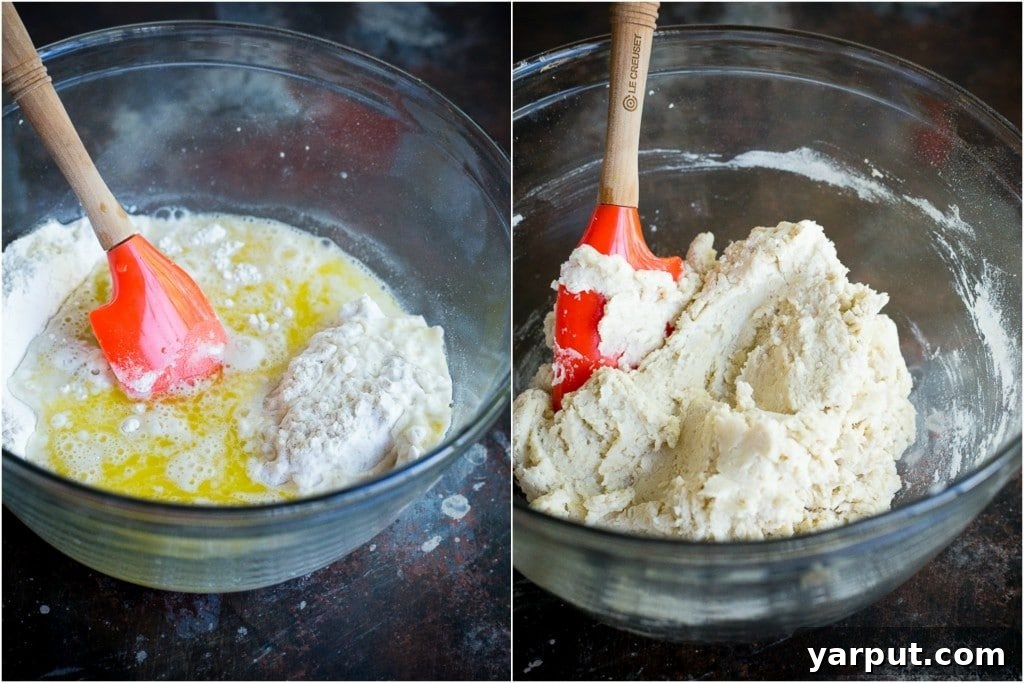
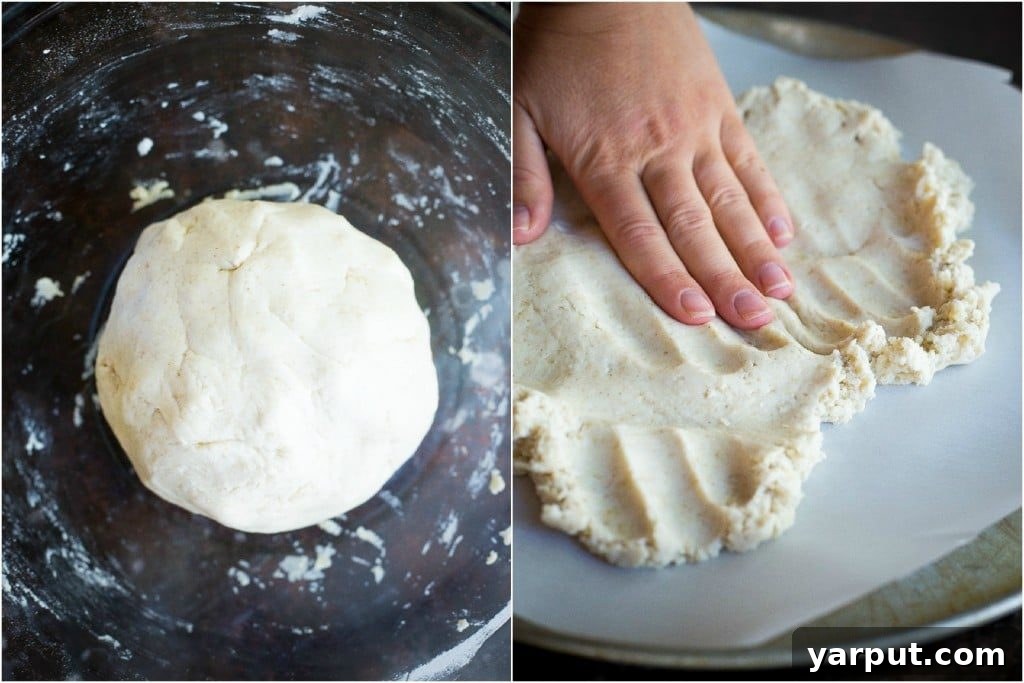
- In a large mixing bowl, combine the gluten-free flour, active dry yeast, and salt. Mix thoroughly until all dry ingredients are well incorporated. Next, add the pure maple syrup, melted butter (or vegan alternative), extra virgin olive oil, and warm water. Mix everything together until a cohesive dough forms. Use your hands to gather the dough into a smooth ball. Cover the bowl tightly with plastic wrap and set it aside in a warm place to rest for 30 minutes. This allows the yeast to activate and the flours to hydrate properly.
- While the dough is resting, preheat your oven to 450 degrees Fahrenheit (230 degrees Celsius). Prepare your pizza pan (choose your preferred size) by lining it with parchment paper. This will prevent sticking and make for easy cleanup. Place the rested ball of pizza dough onto the parchment paper. Using your hands, gently spread and press the dough outwards until it forms an even layer across the pan. For the best chewy and crispy texture, aim for a thickness that isn’t excessively thick.
- Bake the pizza dough for approximately ten minutes, or until it appears firm and cooked through but has not yet turned completely golden brown. This par-baking step is crucial for ensuring a crispy base that won’t become soggy once toppings are added. After par-baking, carefully remove the crust from the oven. Now, add all your desired pizza toppings. Return the pizza to the oven and continue baking for another 5-10 minutes, or until the cheese is melted and bubbly, and the toppings are heated through to your liking.
Notes
This recipe is an adaptation of the “Perfect Pizza Crusts” recipe from “Cooking for Isaiah” by Silvana Nardone.
***For optimal results, this recipe performs best with Bob’s Red Mill Gluten Free 1:1 Baking Flour. When using other regular gluten-free flour mixes, the dough tends to be much stickier and can result in a denser crust once baked. You may also find it necessary to add more flour if you’re not using Bob’s Red Mill 1:1 Baking Flour, as the dough might be too liquidy otherwise.
*This versatile dough can be used to make one large pizza or two smaller, individual-sized pizzas. The uncooked dough also freezes exceptionally well for up to a few weeks. To freeze, simply wrap the dough ball tightly in plastic wrap, then place it in an airtight freezer bag. When ready to use, thaw in the refrigerator overnight or at room temperature until soft enough to spread. For best results and even cooking, especially for a thinner, crispier crust, we recommend spreading the dough out on a large pizza pan. If using a smaller pan, consider using only a portion of the dough to ensure it cooks through completely.
- Category: Entree, Gluten Free, Vegan