
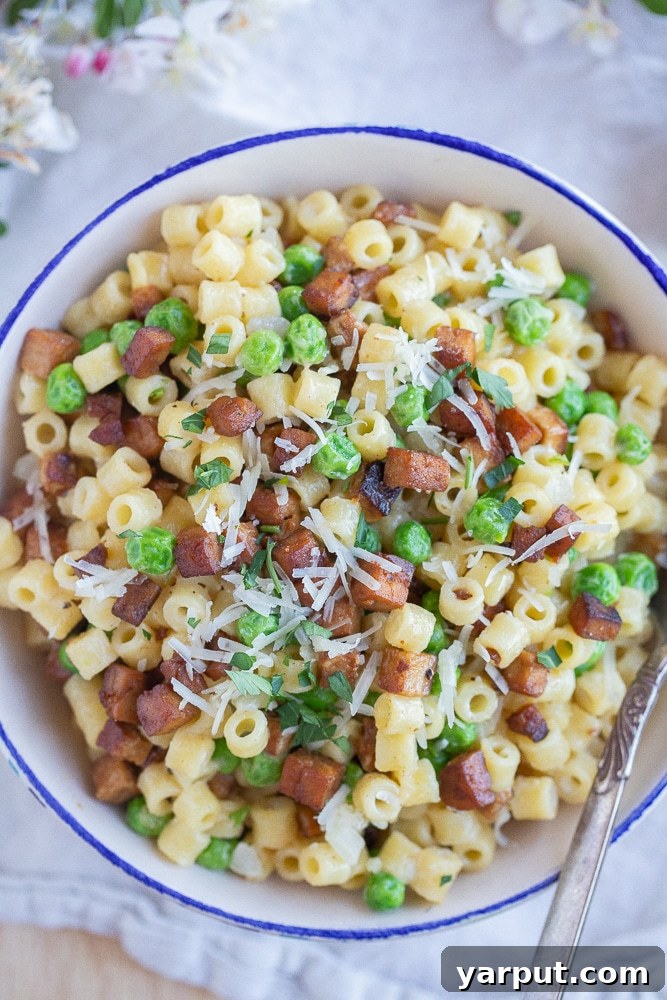
Discover the ultimate weeknight meal: a delightful Vegetarian Pasta with Peas and “Pancetta.” This easy-to-make dish is bursting with savory flavors, featuring a rich, creamy parmesan sauce and satisfyingly crispy tofu “pancetta.” It’s a protein-packed vegetarian option perfect for the whole family, especially as spring blooms.
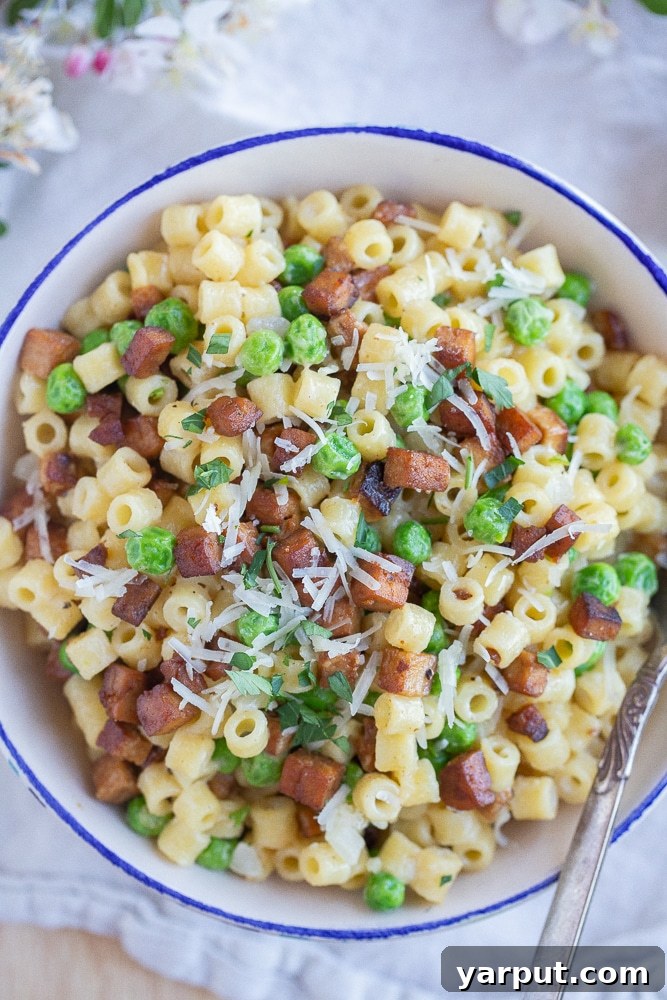
Delicious Vegetarian Pasta with Peas and Crispy Tofu “Pancetta”: Your Ultimate Weeknight Spring Meal
As the days grow longer and the first signs of spring emerge, there’s nothing quite like a meal that captures the essence of the season while still offering warmth and comfort. This Vegetarian Pasta with Peas and “Pancetta” is precisely that—a harmonious blend of cozy, hearty flavors with a bright, fresh pop of spring. It’s a dish designed for ease, flavor, and universal appeal, making it an ideal choice for busy weeknights when you want to gather the family around the table for something truly satisfying. The star components – a velvety parmesan cream sauce, sweet green peas, and delightfully savory, smoky tofu “pancetta” – come together effortlessly to create a memorable dining experience. Serve it alongside a crusty loaf of bread and a crisp green salad for a complete and utterly delightful meal.
Why This Vegetarian Pasta Dish is a Must-Try
This recipe isn’t just another pasta dish; it’s a culinary experience crafted for convenience, flavor, and health. Here’s why it deserves a spot in your regular meal rotation:
-
Effortless & Quick Preparation
Many home cooks might shy away from making their own cheese sauces, but I’m here to tell you: don’t be intimidated! This creamy parmesan sauce is surprisingly simple, requiring just a handful of ingredients and coming together in less than 15 minutes. It’s a foundational skill that opens up a world of culinary possibilities beyond this recipe. The entire meal, from start to finish, can be on your table in about 30 minutes, making it a dream for those hectic weeknights when time is of the essence.
-
Family-Friendly & Versatile
Cheesy pasta is often a surefire hit with kids, and this dish is no exception. What makes it truly special, however, is its ability to please discerning adult palates too. The addition of vibrant peas and the savory tofu “pancetta” elevates the dish, adding complexity and substance. It’s easily customizable; picky eaters can pick and choose what they like, and you can even swap out the peas for other vegetables like broccoli or asparagus if that’s what your family prefers. It’s a truly adaptable meal that caters to diverse tastes.
-
Bursting with Flavor
If you’re a fan of rich, savory parmesan cheese, then prepare to fall in love with this pasta. The sauce is deeply flavorful—salty, tangy, and irresistibly creamy. This luxurious base perfectly complements the earthy sweetness of fresh or frozen peas, creating a beautiful balance. But the real game-changer is the crispy tofu “pancetta,” which introduces a smoky, umami depth that mimics traditional cured meats, rounding out the flavor profile with an exciting textural contrast. A sprinkle of fresh herbs at the end, such as parsley or dill, can further amplify its freshness.
The Wholesome Goodness: Nutritional Benefits of This Meal
Beyond its incredible taste and ease of preparation, this Vegetarian Pasta with Peas and “Pancetta” offers significant nutritional advantages, making it a meal you can feel good about serving:
-
Tofu: A Plant-Powered Protein Source
Tofu, often celebrated in vegetarian cuisine, is an excellent complete protein, meaning it contains all nine essential amino acids necessary for building muscle, repairing tissues, and supporting overall bodily functions. With approximately 10 grams of protein per half-cup serving, it’s a fantastic plant-based ingredient for boosting your protein intake. In this recipe, the tofu is transformed into crispy “pancetta,” adding not only vital nutrients but also a delightful texture and smoky flavor that enhances the entire dish.
-
Peas: Small but Mighty Nutritional Boosters
These unassuming green gems are nutritional powerhouses. Peas boast a rich profile of protein, antioxidants, and dietary fiber, along with a host of essential vitamins and minerals. A single cup of peas delivers a remarkable 8 grams of protein and 7 grams of fiber, contributing to satiety, digestive health, and a strong immune system. Their natural sweetness also adds a wonderful counterpoint to the savory elements of the pasta.
-
Parmesan Cheese: Flavorful & Functional
While cheese might not always be top of mind as a health food, parmesan cheese, when enjoyed in moderation, brings several benefits to the table. It’s an excellent source of protein, calcium (crucial for bone health), and healthy fats. Interestingly, parmesan is naturally very low in lactose, making it a more digestible option for many individuals who experience lactose intolerance compared to other dairy products.
Key Ingredients for Your Vegetarian Peas and “Pancetta” Pasta
Crafting this delicious pasta dish requires a few key ingredients, each playing a crucial role in the overall flavor and texture:
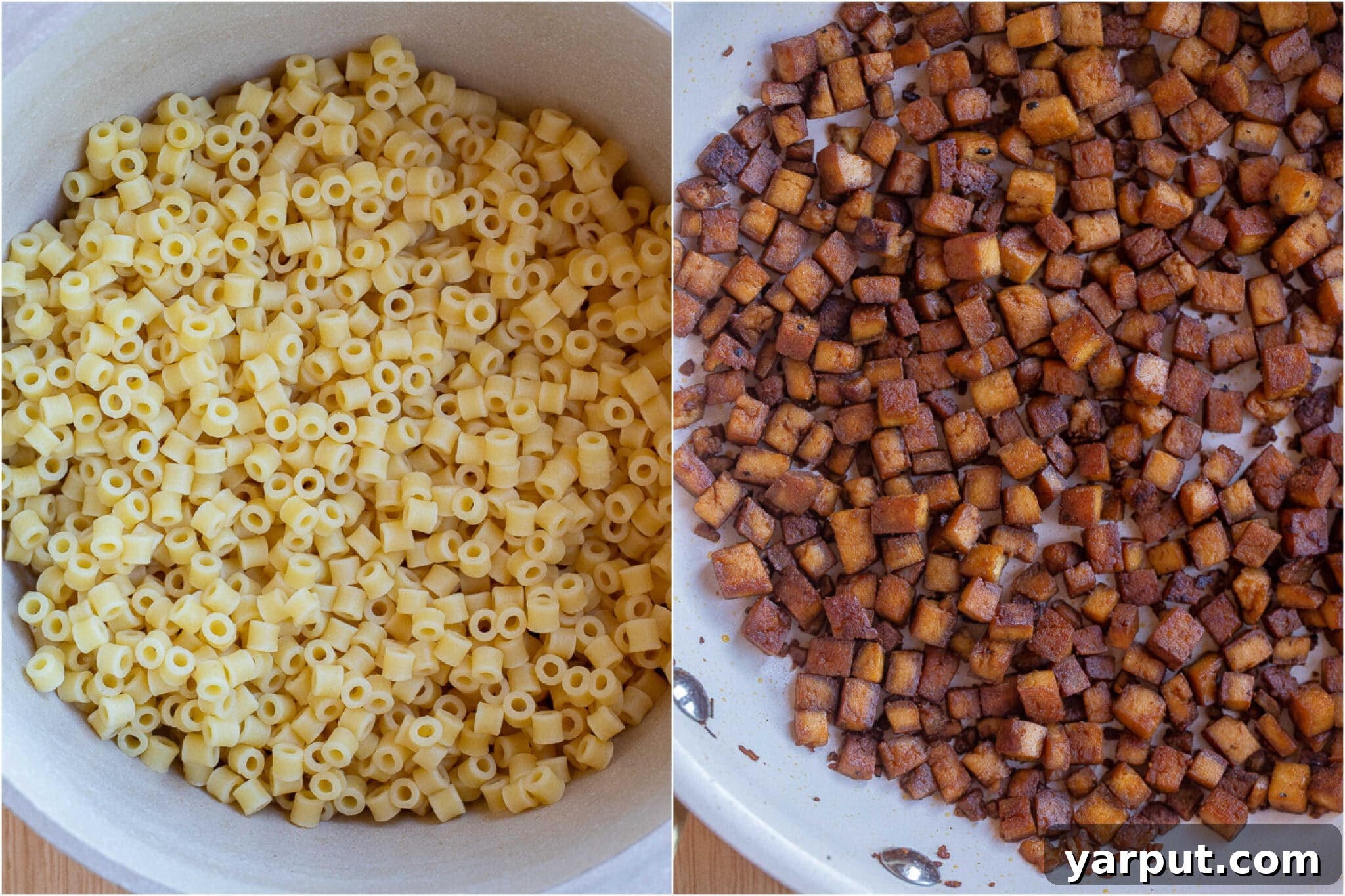
- Pasta: For this recipe, I’ve chosen ditalini pasta. Its small, tubular shape is wonderfully similar in size to peas and the diced “pancetta,” ensuring every forkful is perfectly balanced. However, feel free to use any pasta shape you prefer – penne, orecchiette, or even long spaghetti noodles work beautifully. For dietary needs, gluten-free pasta can be easily substituted without compromising taste or texture.
- “Pancetta”: The star of our vegetarian twist is the crispy, smoky homemade vegan pancetta. Made from tofu, it delivers an incredible depth of smoky flavor and a satisfying chew, while also boosting the protein content. While the tofu “pancetta” cooks relatively quickly, it benefits greatly from marinating for at least an hour to absorb all those delicious smoky notes, so planning ahead is key. If you’re short on time or prefer a shortcut, many grocery stores now offer excellent plant-based smoky meat alternatives that can be diced and crisped up in a pan.
- Peas: I typically use a small bag of frozen peas for convenience. They’re sweet, vibrant, and incredibly easy to cook. Fresh peas can also be used when in season for an extra burst of freshness. A clever tip for frozen peas is to add them directly into the boiling pasta water during the last few minutes of cooking, allowing them to blanch perfectly and cook through without needing a separate pot.
- Parmesan Cheese: The quality of your parmesan significantly impacts the sauce. I highly recommend buying a block of good-quality parmesan and freshly grating it yourself. This yields a far superior flavor and texture compared to pre-shredded varieties, which often contain anti-caking agents. Opt for finely grated parmesan rather than the coarse type typically used for pizza toppings, as it melts more smoothly into the sauce.
- Milk: A creamy sauce needs a good base. I use regular whole milk for its richness, but any unflavored milk—whether dairy or a plant-based alternative like almond, soy, or oat milk—will work wonderfully. Just ensure it’s plain and unsweetened to maintain the savory profile of the dish.
- Aromatics and Seasonings: Essential for building flavor are diced yellow onion and minced garlic, softened in olive oil and butter. A pinch of salt helps the onions caramelize beautifully. All-purpose flour is used to create a roux, thickening the sauce to perfection. Don’t forget salt and black pepper to taste, and fresh herbs for garnish, like parsley or dill, to add a final flourish of freshness.
Step-by-Step Guide: Crafting Your Creamy Vegetarian Pasta
Follow these simple steps to create a truly delicious and comforting Vegetarian Pasta with Peas and “Pancetta” that will become a family favorite:
- Cook Pasta & Peas: Begin by heating a large pot of salted water until it reaches a rolling boil. Add your chosen pasta (ditalini works perfectly) and cook according to package directions until al dente. For an easy addition of vegetables, stir in the frozen peas during the last 2-3 minutes of the pasta’s cooking time. Once done, drain the pasta and peas thoroughly and set them aside.
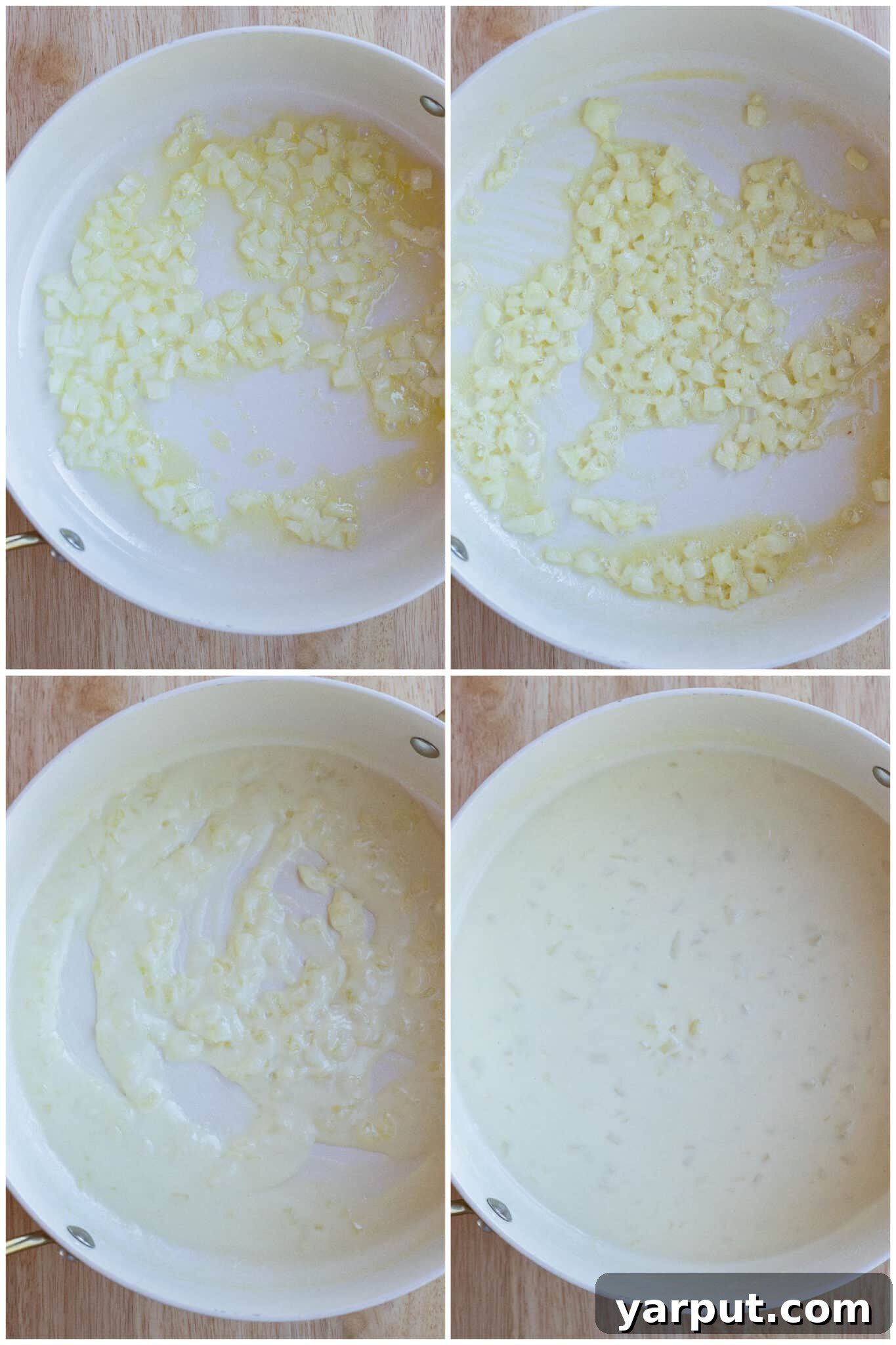
- Sauté Aromatics: While the pasta cooks, heat a large skillet or Dutch oven over medium heat. Add one teaspoon of olive oil, followed by the small diced yellow onion. A pinch of salt will help draw out moisture and soften the onions more quickly. Sauté the onion for 2-3 minutes until translucent and tender. Then, add the minced garlic and 1 1/2 tablespoons of salted butter. Continue to cook for another 1-2 minutes, stirring frequently, until the garlic is fragrant but not browned.
- Build the Roux and Sauce: Sprinkle 1 1/2 tablespoons of all-purpose flour over the sautéed aromatics. Stir continuously for about 1 minute, ensuring the flour is completely incorporated and lightly cooked to remove any raw flour taste. Gradually pour in 2 cups of whole milk (or your preferred milk alternative), whisking constantly to prevent lumps. Reduce the heat to medium-low and continue to cook, stirring frequently, until the sauce thickens to a creamy consistency. This process usually takes about 5-7 minutes. Be sure to keep a close eye on it and stir often to prevent it from scorching at the bottom.
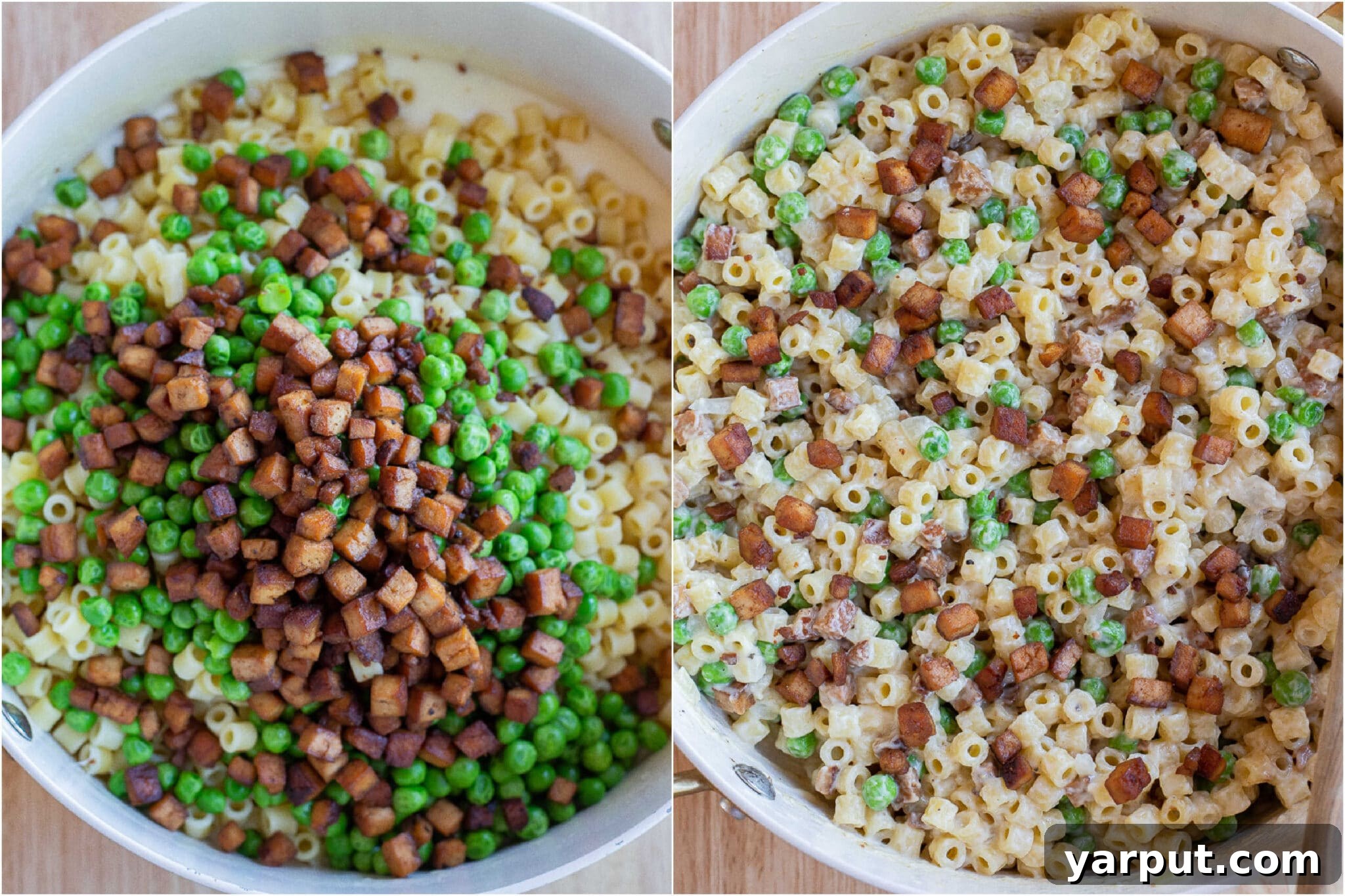
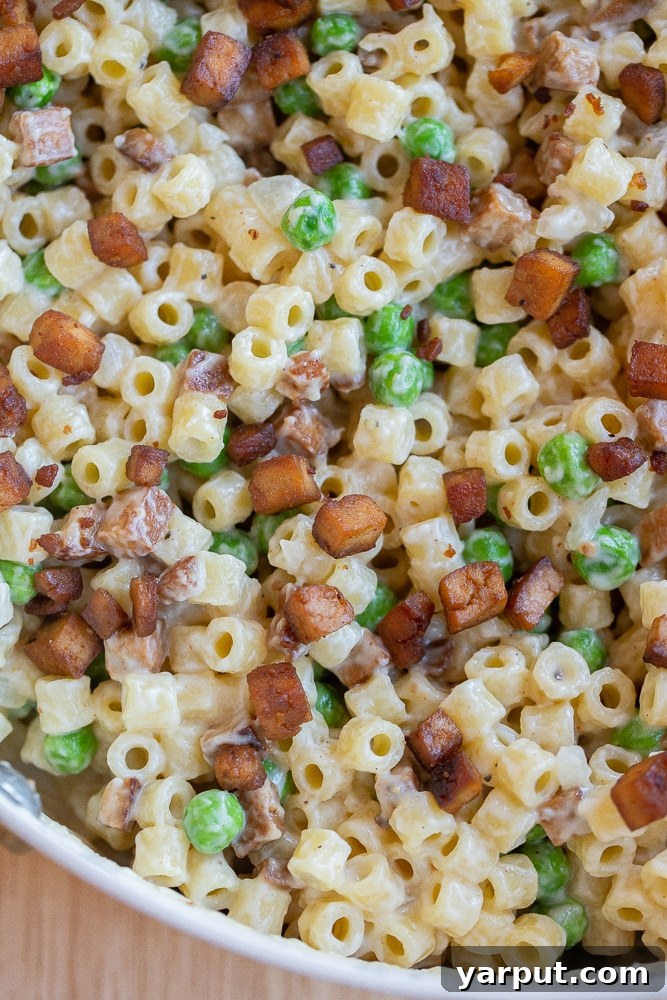
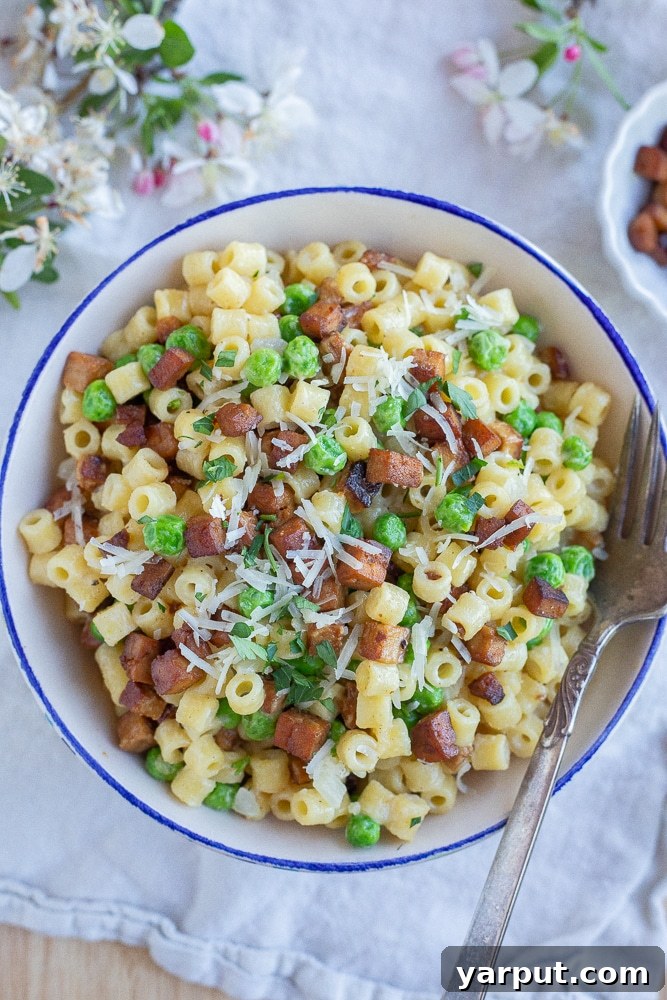
- Combine & Serve: Once your creamy sauce has thickened beautifully, remove it from the heat and stir in 1 1/2 cups of freshly grated parmesan cheese until it is completely melted and smooth. Add the cooked pasta, peas, and the crispy tofu “pancetta” to the skillet. Season generously with salt and black pepper to taste, then gently toss everything together until the pasta and vegetables are evenly coated in the rich, cheesy sauce. Serve immediately, garnished with extra crispy “pancetta” and a sprinkle of fresh parmesan cheese, and if desired, some fresh herbs like chopped parsley or dill. Enjoy your delicious, homemade vegetarian masterpiece!
Expert Tips for the Perfect Vegetarian Pasta Dish
Achieving a restaurant-quality pasta dish at home is easier than you think with a few simple tricks. Here are some expert tips to ensure your Vegetarian Pasta with Peas and “Pancetta” turns out perfectly every time:
- Don’t Forget the Pasta Water: Reserve about a cup of the starchy pasta water before draining. This liquid is gold! If your sauce becomes too thick while mixing or reheating, a splash or two of pasta water can help loosen it up and make it silky smooth, thanks to the starch that helps emulsify the sauce.
- Achieving Crispy Tofu “Pancetta”: For truly crispy tofu, ensure your skillet is hot and use enough oil to coat the bottom. Don’t overcrowd the pan; cook the diced tofu in batches if necessary to allow for even browning and crisping. Pressing the tofu beforehand to remove excess moisture also helps achieve a superior crispy texture.
- Season Liberally and Taste as You Go: Salt is crucial for flavor, not just in the pasta water but also in the sauce. Taste the sauce before adding the pasta and adjust seasoning. Remember to season the final dish with salt and freshly ground black pepper to taste after everything is combined.
- Freshly Grated Parmesan Makes a Difference: As mentioned, using freshly grated parmesan cheese from a block will yield a much better flavor and melt more smoothly than pre-shredded cheese. The intense, salty flavor of fresh parmesan is irreplaceable.
- Prevent Your Sauce from Burning: When thickening the milk and flour mixture, keep the heat on medium-low and stir frequently. Dairy can easily scorch if left unattended, leading to a burnt taste. Patience and constant stirring are your best friends here.
- Make it Gluten-Free: Simply swap out regular pasta for your favorite gluten-free variety and ensure your flour for the roux is gluten-free (such as a 1:1 gluten-free baking flour blend). For the tofu marinade, if using tamari instead of soy sauce, confirm it’s gluten-free.
- Make it Vegan: This recipe is easily adaptable to be fully vegan. Use a high-quality vegan parmesan cheese substitute (there are many great ones available today) and ensure you’re using plant-based milk and vegan butter.
Customize Your Dish: Variations & Serving Suggestions
One of the beauties of this Vegetarian Pasta with Peas and “Pancetta” is its adaptability. Feel free to get creative and tailor it to your personal preferences or what you have on hand:
Variations:
- Add More Veggies: Enhance the nutritional content and flavor by incorporating other spring vegetables. Sautéed asparagus tips, fresh spinach, cherry tomatoes, or even roasted red peppers would make excellent additions. Stir them in along with the peas or at the very end.
- Cheese Alternatives: While parmesan is classic, consider experimenting with other cheeses. A touch of smoked gouda could amplify the smoky notes, or a creamy fontina could make the sauce even richer. For a sharper flavor, a sprinkle of Pecorino Romano could be an option.
- Spice It Up: If you enjoy a bit of heat, add a pinch of red pepper flakes to the garlic and onion while they’re sautéing. This will infuse a subtle warmth throughout the dish.
- Herb Power: Beyond parsley and dill, consider fresh basil, chives, or even a hint of mint (which pairs surprisingly well with peas) for different aromatic profiles.
- Different “Pancetta” Flavors: While the tofu “pancetta” is fantastic, you could also experiment with crispy shiitake mushrooms or even crumbled veggie sausage for a different savory element.
Serving Suggestions:
- Crusty Bread: A staple with any pasta dish, crusty bread is perfect for soaking up every last drop of that creamy sauce.
- Fresh Green Salad: A simple mixed green salad with a light vinaigrette offers a refreshing contrast and balances the richness of the pasta.
- Light White Wine: Pair this dish with a crisp Sauvignon Blanc or a light Pinot Grigio to complement the fresh flavors of spring.
- Roasted Vegetables: A side of roasted broccoli, carrots, or Brussels sprouts can add more texture and nutrition to your meal.
Frequently Asked Questions About This Recipe
Here are some common questions about making this Vegetarian Pasta with Peas and “Pancetta”:
- How long does the tofu need to marinate for optimal flavor? For the best results, allow your tofu “pancetta” to marinate for at least 30 minutes. However, an hour or two (or even overnight in the refrigerator) will allow the tofu to absorb even more of that delicious smoky flavor, making it truly exceptional.
- What type of pasta is best for this recipe? I highly recommend ditalini because its size and shape are ideal for pairing with the peas and diced “pancetta,” ensuring a perfect bite every time. However, any short pasta like penne, fusilli, or orecchiette will work beautifully. If you prefer long noodles, spaghetti or linguine can also be used.
- Can frozen peas be used, or should I use fresh? Frozen peas are perfectly acceptable and convenient for this recipe. They maintain their flavor and texture wonderfully. You can add them directly to the boiling pasta water during the last few minutes of cooking. Fresh peas, when in season, would also be a fantastic choice for an even brighter, sweeter flavor.
- How long do leftovers last, and how should I reheat them? If stored in an airtight container in the refrigerator, leftovers of this pasta dish should remain fresh for about 4-5 days. To reheat, you can use the microwave, or gently warm it in a pot on the stovetop over low heat, adding a splash of milk or pasta water if the sauce has thickened too much.
- What if my sauce is too thin or too thick? If your sauce is too thin, continue to simmer it gently, stirring, until it reduces and thickens. If it becomes too thick, especially after adding the cheese, simply add a tablespoon or two of milk or reserved pasta water until it reaches your desired consistency.
Have a question I didn’t answer? Feel free to ask in the comment section below, and I’ll get back to you as soon as possible!
Explore More Delicious Vegetarian Pasta Recipes
If you loved this recipe and are looking for more plant-based pasta inspiration, check out these other fantastic vegetarian pasta dishes:
- Green Goddess Pasta with Parmesan
- Easy Roasted Vegetable Pasta
- Crispy Sausage Pesto Pasta
- Cheesy Buffalo Butternut Squash Pasta
- Kale and White Bean Pasta with Parmesan
Recipe Summary: Vegetarian Pasta with Peas and “Pancetta”
This delightful pasta dish offers a perfect combination of comfort and fresh spring flavors, making it an excellent choice for any day of the week. With a prep time of just 10 minutes and a cook time of 20 minutes, you can have a wholesome, protein-packed vegetarian meal on your table in 30 minutes.
Recipe Details:
- Author: She Likes Food
- Total Time: 30 minutes
- Prep Time: 10 minutes
- Cook Time: 20 minutes
- Yield: 4-6 servings
- Diet: Vegetarian
- Category: Dinner, Vegetarian
- Method: Stovetop
- Cuisine: American
Ingredients:
- 1 lb ditalini pasta, or pasta of choice
- 1 teaspoon olive oil
- 1/2 cup small diced yellow onion
- 2-3 cloves garlic, minced
- 1 1/2 tablespoons salted butter
- 1 1/2 tablespoons all-purpose flour (gluten-free if needed)
- 2 cups whole milk, or milk of choice
- 1 1/2 cups freshly grated parmesan cheese, plus more for garnish if desired
- 1 1/2 cups frozen peas
- 2-3 cups homemade vegan pancetta (or store-bought plant-based smoky meat alternative)
- Salt and black pepper, to taste
- Fresh herbs for garnish, if desired (Parsley or dill would work well)
Instructions:
- Heat a large pot of water until boiling. Add in the pasta and cook according to package directions. Add the frozen peas into the boiling pasta water when the pasta is about 2-3 minutes from being done. Drain pasta and peas and set aside.
- Heat a large skillet over medium heat and add in one teaspoon of oil and the diced onion. A pinch of salt will help soften the onions. Cook onion until soft, 2-3 minutes, and then add in the minced garlic and 1 1/2 tablespoons butter. Cook until garlic is fragrant, 1-2 minutes, stirring frequently.
- Next, add in the flour and stir until it’s completely mixed in. Cook for about 1 minute and then pour in the milk. Stir everything together well and cook on medium-low heat until you have a thick sauce. It will take about 5-7 minutes to thicken up, and you’ll want to keep a close eye on it while it is cooking, so it doesn’t burn.
- Once sauce has thickened, add in the freshly grated parmesan and mix until cheese is completely melted. Add in the cooked pasta, peas and tofu pancetta and season with salt and black pepper, to taste. Mix everything together well and serve right away. Garnish with extra pancetta and parmesan cheese, if desired. Enjoy!
Chef’s Note:
If you’re not using my homemade tofu pancetta recipe, I suggest seeking out a smoky, plant-based cured meat alternative in the grocery store’s plant-based section. You can then dice it and crisp it up in a pan with a little oil for a similar effect.
Did you make this delicious recipe?
We’d love to see it! Tag @shelikes.food on Instagram and use the hashtag #shelikesfood to share your creation with us!