
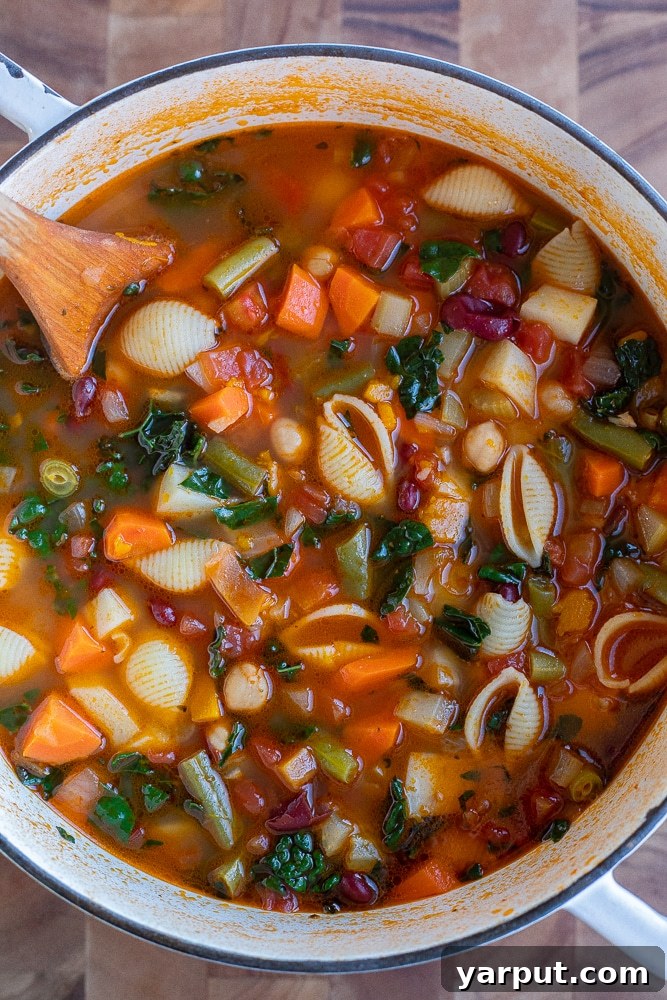
Discover the ultimate vegetarian Minestrone Soup recipe, a heartwarming and healthy dish brimming with vibrant vegetables, nourishing beans, and comforting pasta. This one-pot wonder is designed to be effortlessly prepared, making it an ideal meal for any day of the week, especially when the weather turns chilly. Packed with wholesome ingredients, it promises to fill you up and fuel your body. Enjoy this cozy Minestrone with a sprinkle of Parmesan cheese and a slice of crusty bread for a truly satisfying lunch or dinner experience.
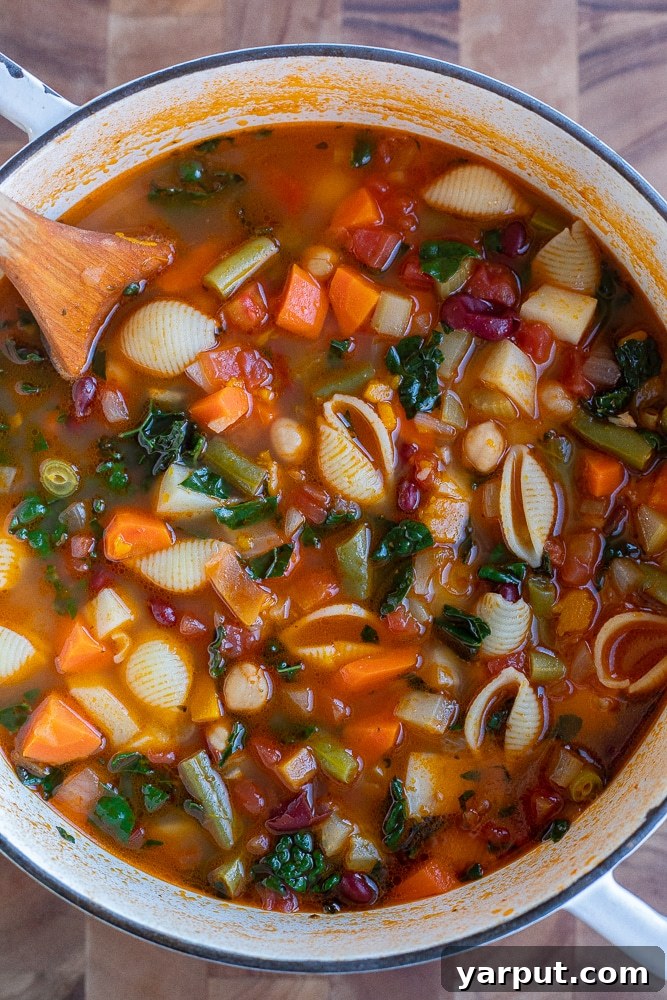
Minestrone soup holds a special place in my heart now, though my childhood self might be surprised to hear it. As a kid, its abundance of vegetables and hearty nature were precisely what I disliked. Fast forward to today, and these are the very qualities I cherish most about this classic Italian dish. My version of minestrone is a vibrant celebration of fresh produce, rich tomato broth, and two types of protein-packed beans, making it a staple throughout the cooler months. There’s nothing quite like a steaming bowl, generously topped with freshly grated Parmesan and served alongside a slice of toasted sourdough. It’s comfort in a bowl, a nourishing hug on a cold day. I’m thrilled to share my cherished vegetarian Minestrone Soup recipe, a rendition that has won me over completely, and I hope it does the same for you!
Why This Vegetarian Minestrone Soup Will Be Your New Favorite
In a world of fast-paced living, finding a meal that is both nutritious and simple to prepare can feel like a culinary victory. This vegetarian Minestrone Soup delivers on all fronts, offering a delightful blend of convenience, comfort, and health benefits that make it an indispensable addition to your recipe repertoire. Here’s a closer look at why this veggie-packed soup is destined to become a beloved staple in your kitchen:
- Effortlessly Simple to Prepare: Soups are renowned for their forgiving nature and straightforward cooking methods, and this minestrone is no exception. It’s essentially a “dump and simmer” recipe, requiring minimal hands-on time. All the ingredients come together in a single large pot, simmering gently until every vegetable is tender and the flavors have beautifully melded. With only about 40 minutes from start to finish, much of which is inactive cooking time, you can have a wholesome, homemade meal on the table with remarkable ease. This makes it a perfect choice for busy weeknights or relaxed weekend cooking.
- The Quintessential Cold-Weather Comfort: While soup can be enjoyed year-round, there’s an undeniable magic to a warm, hearty bowl during the crisp autumn and freezing winter months. This robust minestrone, with its comforting broth and substantial ingredients, provides a cozy warmth that penetrates deep. It’s the perfect antidote to chilly temperatures, offering a sense of nourishment and well-being. Imagine coming home to a pot of this simmering on the stove – it’s an instant mood booster and a truly satisfying meal that feels like a warm embrace.
- Excellent for Meal Prepping and Freezing: Embracing meal prep has become a game-changer in my routine, and soup, particularly minestrone, is an absolute superstar for make-ahead convenience. This recipe is incredibly freezer-friendly, allowing you to prepare a large batch and store it for future meals. Whether you portion it into single-serving containers for quick, healthy lunches on demand or freeze it as a whole batch for family dinners, it reheats beautifully, losing none of its rich flavor or satisfying texture. This makes healthy eating incredibly accessible, even on your busiest days.
What Exactly is Minestrone Soup? A Deep Dive into a Classic
If you’re new to the world of Italian culinary delights, allow me to introduce you to Minestrone – a name that, in Italian, essentially means “big soup.” And truly, it lives up to its name, being a classic, hearty Italian vegetable soup that is famously adaptable and endlessly flavorful. Unlike a simple vegetable broth, Minestrone is distinctively substantial, traditionally brimming with a colorful assortment of vegetables, pasta, and beans, which collectively contribute to its robust and satisfying consistency. It’s a peasant dish at heart, born from the need to use up whatever fresh produce was available, making each pot a unique reflection of the season and the cook’s pantry.
The flavor profile of Minestrone is typically built upon a rich tomato-based broth, deepened and enhanced by a medley of fresh and dried herbs, and often fortified with quality vegetable broth. While specific ingredients can vary widely by region and household, common traditional vegetables include staples like carrots, celery, onions (the “soffritto” base), green beans, potatoes, and leafy greens such as kale or spinach. The addition of pasta provides comforting carbohydrates, and beans (often cannellini or kidney beans) add a creamy texture and vital plant-based protein, transforming it from a light soup into a truly filling meal. Best enjoyed with a generous grating of Parmesan cheese and a slice of rustic, crusty bread, Minestrone is more than just a soup; it’s a culinary hug, embodying warmth, nourishment, and the simple pleasures of Italian home cooking.
Essential Ingredients for Your Classic Vegetarian Minestrone Soup
Crafting a truly memorable Minestrone Soup begins with a selection of fresh, high-quality ingredients. While the beauty of minestrone lies in its flexibility, a few key components form the backbone of this comforting classic. Here’s a detailed look at the core ingredients for my vegetarian version:
- Flavorful Vegetable Broth: The foundation of any great soup is its broth. I often opt for a high-quality vegetable broth concentrate or paste, mixed with water. These concentrates are incredibly convenient for storage and typically deliver a more intense, rich flavor compared to standard boxed broths. However, any good quality vegetable broth will work beautifully. For a healthier option, consider using low-sodium broth to better control the overall salt content of your soup.
- Hearty Beans: Beans are crucial for adding substance, protein, and a creamy texture to minestrone. My personal preference for this recipe includes a combination of kidney beans and chickpeas (garbanzo beans). Both offer a wonderful texture and contribute to the soup’s heartiness. You can certainly experiment with other varieties, such as classic cannellini beans (white kidney beans), great northern beans, or even a mix of several different types to enhance the nutritional profile and flavor complexity. Remember to rinse and drain canned beans thoroughly before adding them to the pot to reduce excess sodium and improve digestibility.
- Comforting Pasta: The pasta in minestrone transforms it into a more substantial and satisfying meal. I recommend using smaller, bite-sized pasta shapes like ditalini, small shells, or elbow macaroni. This ensures that the pasta is similar in size to the vegetables and beans, making each spoonful a harmonious blend of ingredients. For those with dietary restrictions, gluten-free pasta varieties are readily available and work perfectly in this recipe without compromising on taste or texture. Cook the pasta separately to al dente before adding it to the soup to prevent it from becoming mushy and absorbing too much broth.
- Rich Canned Tomatoes: Tomatoes are essential for creating the signature savory and slightly tangy base of minestrone. While fresh tomatoes can be used when in season, canned tomatoes are a reliable and convenient option year-round, offering a concentrated flavor and contributing valuable liquid to the broth. I prefer petite diced tomatoes because they break down nicely without leaving large, chunky pieces. Crushed tomatoes or even whole peeled tomatoes (which you can crush by hand) are also excellent choices, each offering a slightly different texture to the finished soup.
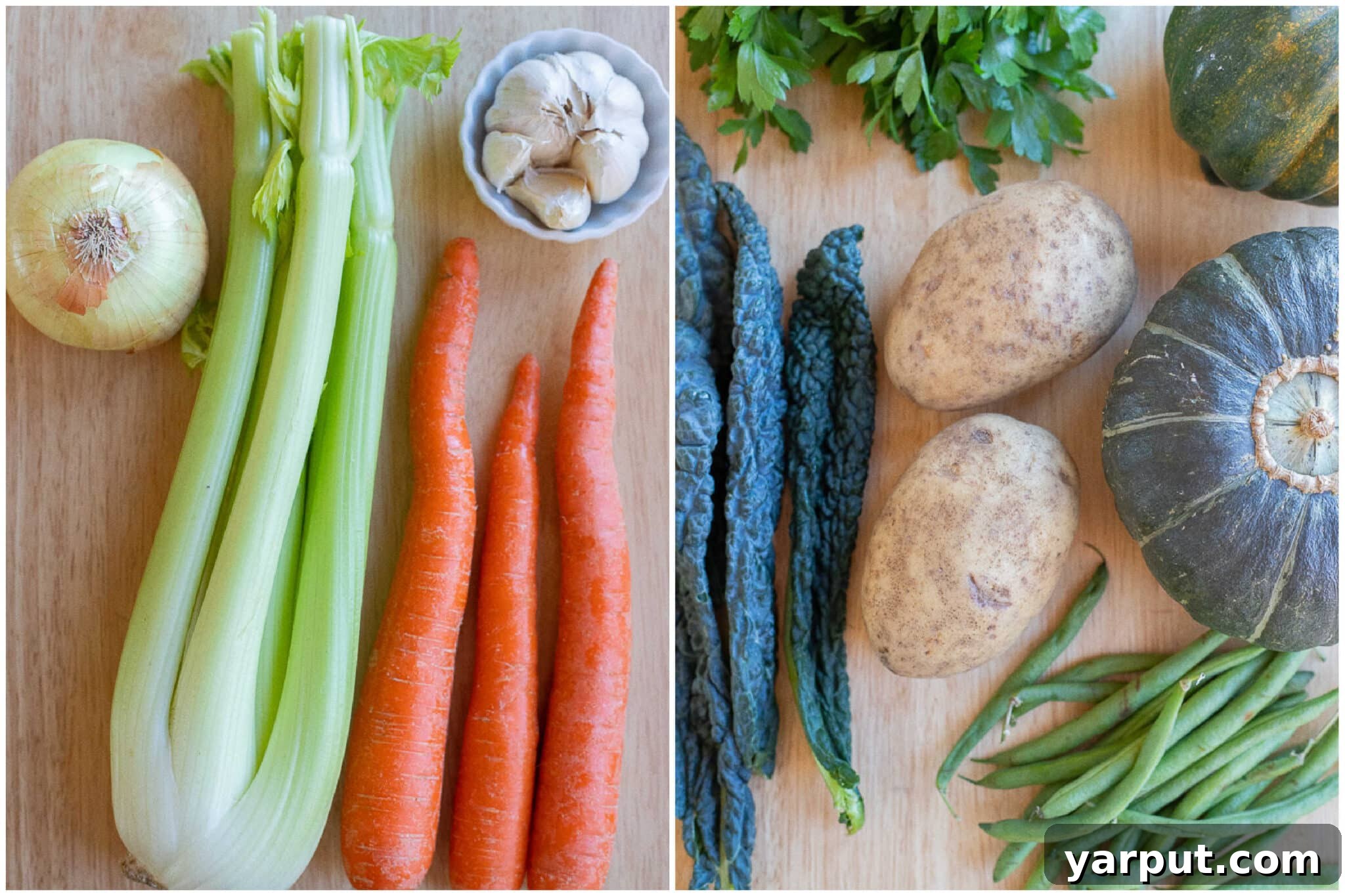
- Abundant Fresh Vegetables: This is where minestrone truly shines! Traditional vegetables often include a vibrant mix of aromatics and garden staples. My recipe features the classic “soffritto” base of onion, garlic, carrot, and celery, which are sautéed to build a deep flavor foundation. Beyond these, I add green beans, and potato for body. For leafy greens, kale or spinach are fantastic additions, offering a boost of nutrients and a beautiful color. The beauty of minestrone is its adaptability; feel free to customize it with seasonal vegetables such as zucchini, butternut squash, leeks, or even bell peppers to make it uniquely yours.
- Fragrant Herbs and Spices: Herbs and spices are the soul of minestrone, infusing it with aromatic depth. I love using a combination of dried oregano and fresh thyme for their earthy, warm notes, along with fresh parsley for a burst of freshness at the end. Don’t shy away from adding other savory, robust herbs like rosemary or bay leaves. A pinch of red pepper flakes adds a subtle warmth and gentle heat, which can be adjusted to your taste preference. Freshly ground black pepper and salt are, of course, essential for balancing and enhancing all the flavors.
How To Prepare Your Delicious Vegetarian Minestrone Soup
Follow these simple steps to create a rich and satisfying vegetarian Minestrone Soup in your own kitchen:
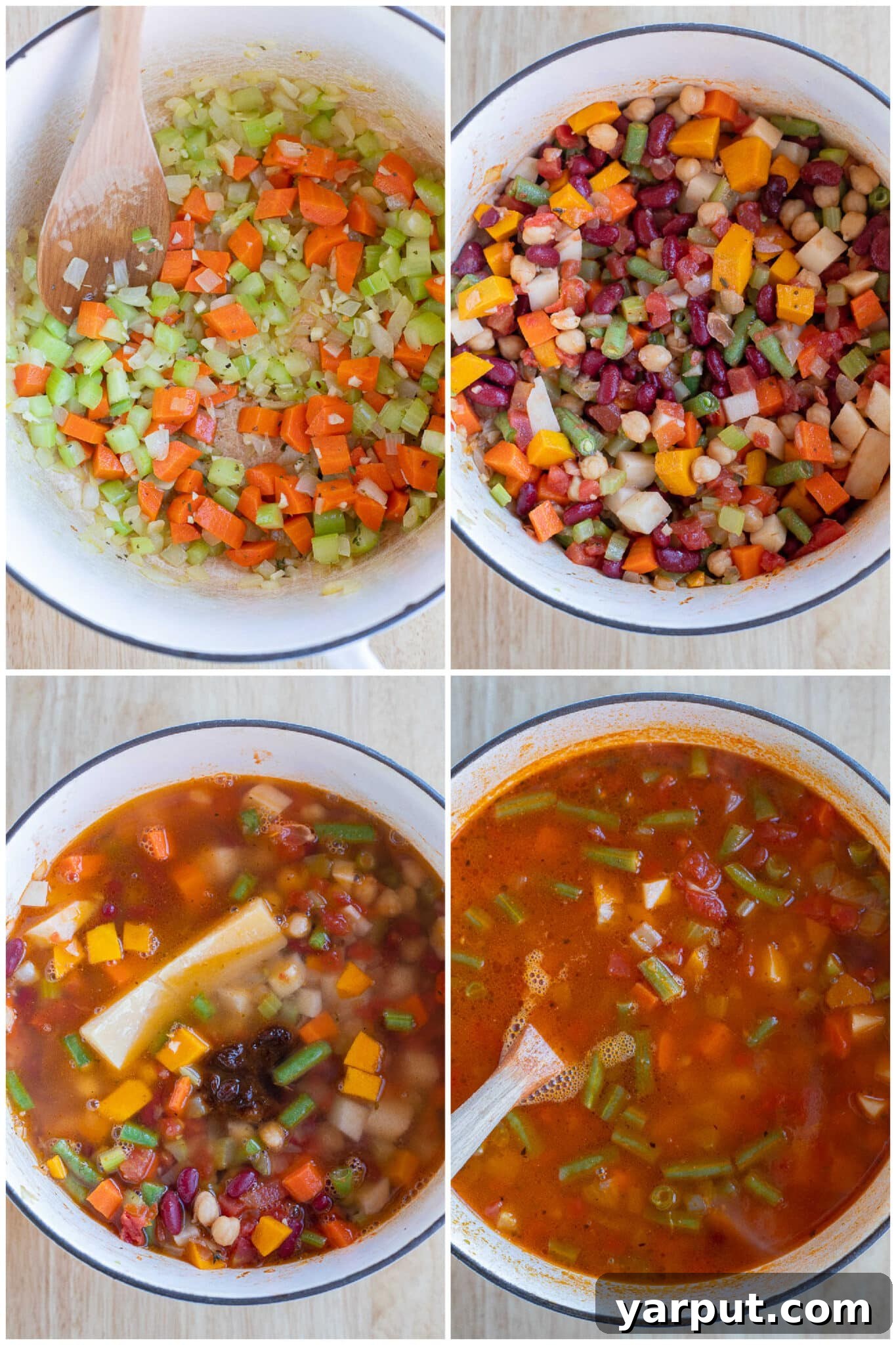
- Sauté the Aromatics: Begin by heating an extra-large soup pot or Dutch oven over medium heat. Add the olive oil. Once the oil is shimmering, add the diced yellow onion, celery, and carrot along with a generous pinch of salt. Cook, stirring occasionally, until the vegetables begin to soften and become translucent, which typically takes about 5 minutes. Next, stir in the minced garlic, fresh thyme leaves, and dried oregano. Continue to cook for another 2-3 minutes, allowing the aromatic herbs to become wonderfully fragrant.
- Add Hearty Vegetables and Broth: To the pot, add the diced potato, your chosen diced squash (such as kabocha or butternut), and the chopped green beans. Stir in the thoroughly rinsed and drained kidney beans and chickpeas, along with the entire can of petite diced tomatoes (including their juice). Add another generous pinch of salt and, if you enjoy a little kick, red pepper flakes to taste. Stir all these ingredients together until well combined. Pour in the vegetable stock and, for an extra layer of savory depth, add the rind of a fresh Parmesan cheese block (this is optional but highly recommended for flavor infusion). Mix everything thoroughly.
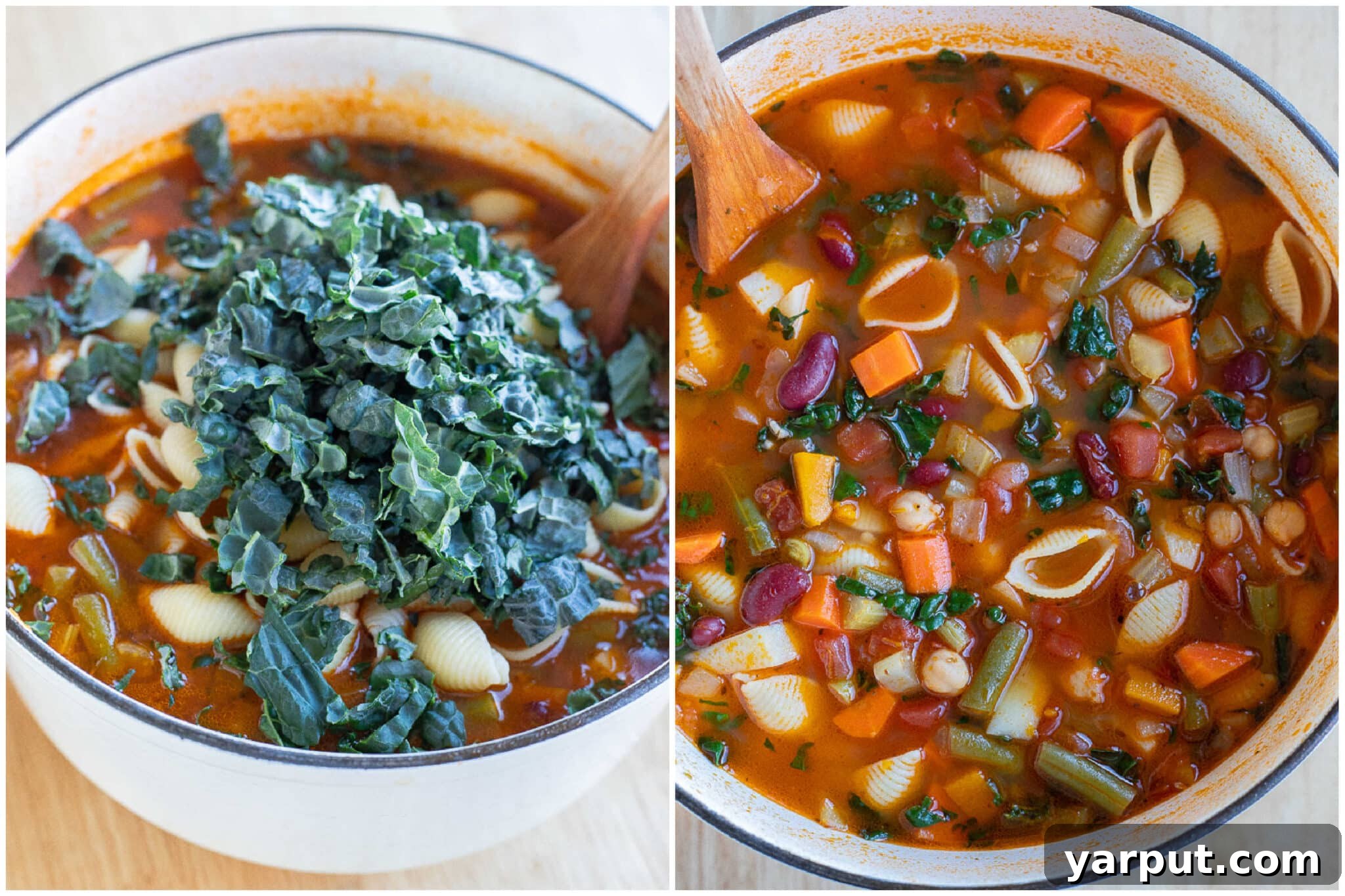
- Simmer to Perfection: Place a lid on your pot and bring the soup to a gentle simmer. Reduce the heat slightly and let it continue to simmer for about 20-25 minutes, or until all the vegetables, especially the potatoes and squash, are fork-tender. Remember to stir the soup occasionally to prevent anything from sticking to the bottom of the pot. Towards the end of the simmering time, add the al dente cooked pasta and the chopped kale. Cook for an additional 3-4 minutes, just until the pasta is fully warmed through and the kale has wilted beautifully into the soup. Taste the soup and adjust the seasoning with additional salt or pepper as needed to achieve your desired flavor balance.
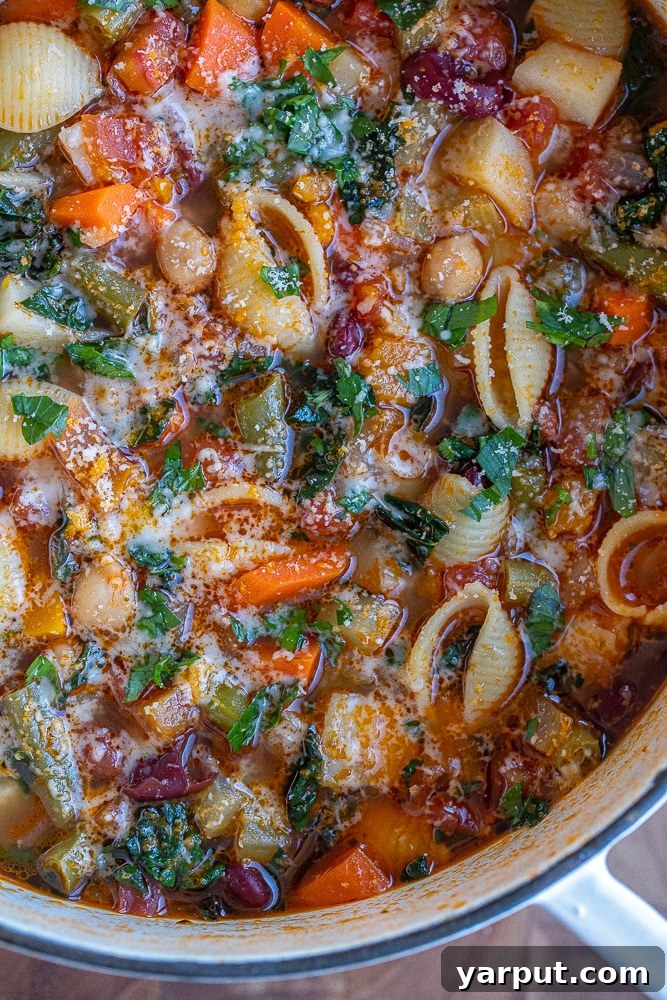
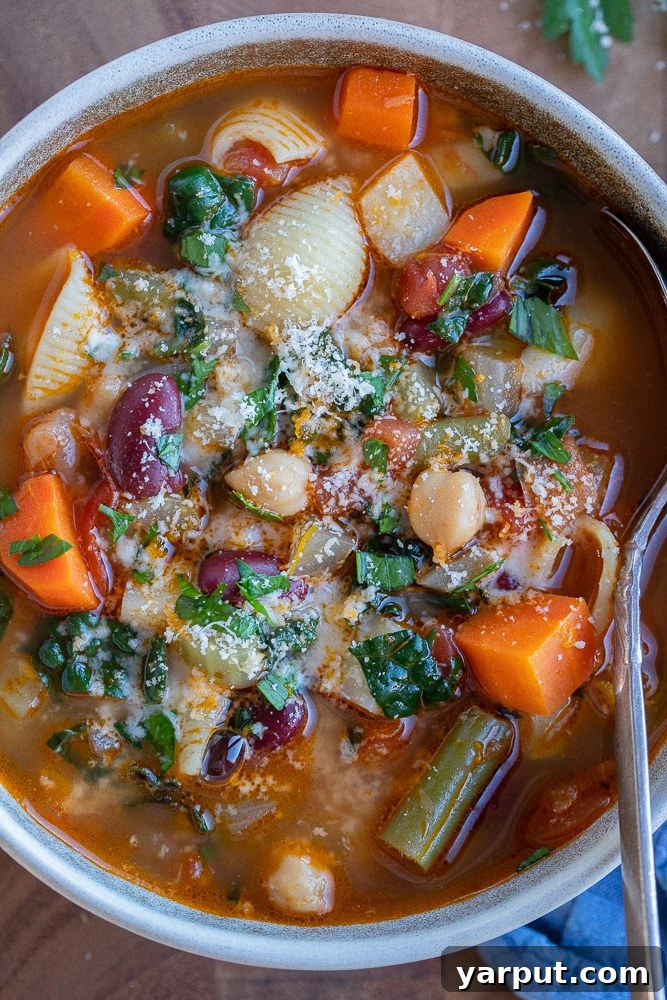
- Serve and Store: Ladle the steaming hot Minestrone Soup into bowls immediately. Garnish each serving with a sprinkle of fresh Parmesan cheese and a dash of chopped fresh parsley, if desired, for added flavor and visual appeal. This soup is best enjoyed fresh, but its flavors deepen beautifully over time. Leftover soup can be stored in an airtight container in the refrigerator for up to 5 days. For longer storage, this Minestrone freezes exceptionally well for up to 3 months, making it perfect for future quick meals.
Expert Tips for the Best Minestrone Soup
Elevate your Minestrone Soup to new heights with these simple yet effective tips:
- Don’t Overcook the Pasta: To prevent mushy pasta, cook it separately to al dente according to package directions before adding it to the soup. Alternatively, if adding directly to the pot, ensure it’s done just before serving, as pasta will continue to absorb liquid and cook if left in the soup.
- Boost Flavor with Soffritto: Don’t rush the initial sautéing of the onion, celery, and carrot. This process, known as creating a “soffritto,” is essential for building a deep flavor base for your soup. Cook them until truly softened and slightly translucent before adding garlic and herbs.
- Season in Layers: Add salt at different stages of cooking – with the initial vegetables, then with the tomatoes and broth. Taste and adjust seasoning at the very end. This layering ensures a well-balanced flavor throughout the soup.
- Customize Your Veggies: Minestrone is incredibly versatile. Feel free to swap out or add any seasonal vegetables you have on hand. Zucchini and summer squash are great in warmer months, while tougher root vegetables like parsnips or sweet potatoes can be added with the potatoes for a heartier winter version.
- Fresh Herbs Make a Difference: While dried herbs are convenient, fresh herbs, especially for garnishing, add a vibrant burst of flavor and freshness. Fresh parsley or basil stirred in just before serving can brighten the entire dish.
- Add a Parmesan Rind: Don’t throw away your Parmesan rinds! Adding one to the simmering broth will infuse the entire soup with a rich, umami depth that is simply irresistible. Just remember to remove it before serving.
Frequently Asked Questions About Minestrone Soup
Here are answers to some common questions about making and enjoying this delicious Minestrone Soup:
- Is this recipe suitable for a vegan diet? Yes, absolutely! This recipe is naturally vegan-friendly. The only non-vegan ingredient typically added is Parmesan cheese for topping. Simply omit the Parmesan or substitute it with a high-quality vegan Parmesan alternative to make the entire dish completely vegan.
- How can I make this recipe gluten-free? Making this minestrone gluten-free is incredibly easy. The primary ingredient containing gluten is the pasta. Simply swap out traditional pasta for your favorite gluten-free pasta variety. There are many excellent options available today that hold up well in soup.
- Can Minestrone Soup be frozen for later? Yes, this minestrone soup freezes beautifully! First, allow the soup to cool completely to room temperature. Then, transfer it into freezer-safe containers or heavy-duty freezer bags. Ensure there’s a little headspace if using rigid containers, as liquids expand when frozen. It can be stored in the freezer for up to 3 months. Thaw overnight in the refrigerator before reheating.
- How long do leftovers typically last in the refrigerator? When stored in an airtight container in the refrigerator, leftover Minestrone Soup will remain fresh and delicious for approximately 4-5 days. To reheat, you can use a microwave or gently warm it in a pot on the stovetop until heated through. You might need to add a splash of extra vegetable broth or water if the soup has thickened too much.
- Am I able to use different types of vegetables in this soup? Absolutely! Minestrone is known for its versatility, and experimenting with various vegetables is highly encouraged. Feel free to incorporate what’s in season or what you have on hand. Bell peppers, zucchini, green beans, peas, corn, or even tougher greens like Swiss chard can all be wonderful additions. Just be mindful of cooking times for different vegetables; denser ones like carrots or potatoes need more time than softer ones like zucchini or spinach.
Have a question I didn’t answer? Please feel free to ask me in the comment section below, and I will get back to you as soon as possible!
Looking For More Nourishing Vegetarian Soup Recipes?
If you’re a fan of comforting and healthy vegetarian soups, be sure to explore these other fantastic recipes:
- Vegan Chickpea Noodle Soup: A plant-based twist on a classic comfort food, perfect for soothing cold days.
- Veggie Packed Creamy Cheddar Broccoli Soup: Indulgently creamy yet packed with healthful broccoli, a family favorite.
- Easy Roasted Butternut Squash Soup: Sweet and savory, this soup is a celebration of autumn flavors, made simple with roasting.
- Vegetarian Tortilla Soup: A vibrant and zesty soup, bursting with Mexican-inspired flavors and delightful toppings.
- Smoky Sweet Potato Black Bean Soup: A hearty and flavor-rich soup that perfectly combines the sweetness of potato with smoky black beans.
Classic Vegetarian Minestrone Soup
Author: She Likes Food
Total Time: 1 hour
Yield: 6 servings
Diet: Vegetarian (can be vegan)
Print Recipe
Description
This vegetarian Minestrone Soup is a hearty and flavorful one-pot meal, packed with fresh vegetables, two types of beans, and comforting pasta. It’s easy to make, freezer-friendly, and perfect for a nutritious lunch or dinner, especially during cooler weather. Serve with Parmesan cheese and crusty bread for a complete meal.
Ingredients
- 1 tablespoon olive oil
- 1 small yellow onion, diced
- 1 cup diced celery
- 1 cup diced carrot
- 3-4 cloves garlic, minced
- 1 teaspoon fresh thyme leaves
- 1/2 teaspoon dried oregano
- 1 cup diced potato
- 1 cup diced squash*
- 1 cup chopped green beans, about 1/2 an inch in length
- 1 (14.5 oz) can petite diced tomatoes (with juice)
- 1 (15 oz) can kidney beans, rinsed and drained
- 1 (15 oz) can chickpeas, rinsed and drained
- 8-10 cups vegetable broth, depending on desired soup consistency
- 1 rind of fresh Parmesan cheese (optional, remove before serving)
- 1 1/2 cups al dente cooked small pasta (e.g., ditalini, small shells)
- 1 cup chopped kale
- Salt and red pepper flakes, to taste
- Parmesan cheese and fresh parsley for topping, if desired
*Note: You can use any kind of squash you like. Kabocha squash works well, as do butternut squash, acorn squash, or even zucchini and summer squash.
Instructions
- Sauté Aromatics: Heat an extra-large soup pot over medium heat and add the olive oil. Once hot, add the diced onion, celery, carrot, and a pinch of salt. Cook until softened (about 5 minutes). Stir in the minced garlic, fresh thyme, and dried oregano. Cook for another 2-3 minutes until fragrant.
- Add Vegetables, Beans, and Broth: Add the diced potato, squash, and green beans to the pot, along with the drained kidney beans, chickpeas, and the can of diced tomatoes (including the juice). Add a generous pinch of salt and red pepper flakes (to taste). Stir well. Pour in the vegetable stock and add the Parmesan cheese rind (if using). Mix all ingredients thoroughly.
- Simmer: Cover the pot and bring the soup to a simmer. Reduce heat and simmer for 20-25 minutes, or until all vegetables are fork-tender, stirring occasionally. Add the cooked pasta and chopped kale, cooking for an additional 3-4 minutes until the pasta is warmed through and kale is wilted. Taste and adjust salt and pepper as needed.
- Serve: Serve the soup immediately, topped with Parmesan cheese and fresh parsley, if desired. Store leftovers in the refrigerator for up to 5 days or freeze for up to 3 months.
Watch the Recipe Video:
Recipe Details
- Prep Time: 20 mins
- Cook Time: 40 mins
- Category: Dinner, Vegetarian
- Method: Stovetop
- Cuisine: Italian-American
Nutritional Information
Did you make this recipe?
Tag @shelikes.food on Instagram and hashtag it #shelikesfood